
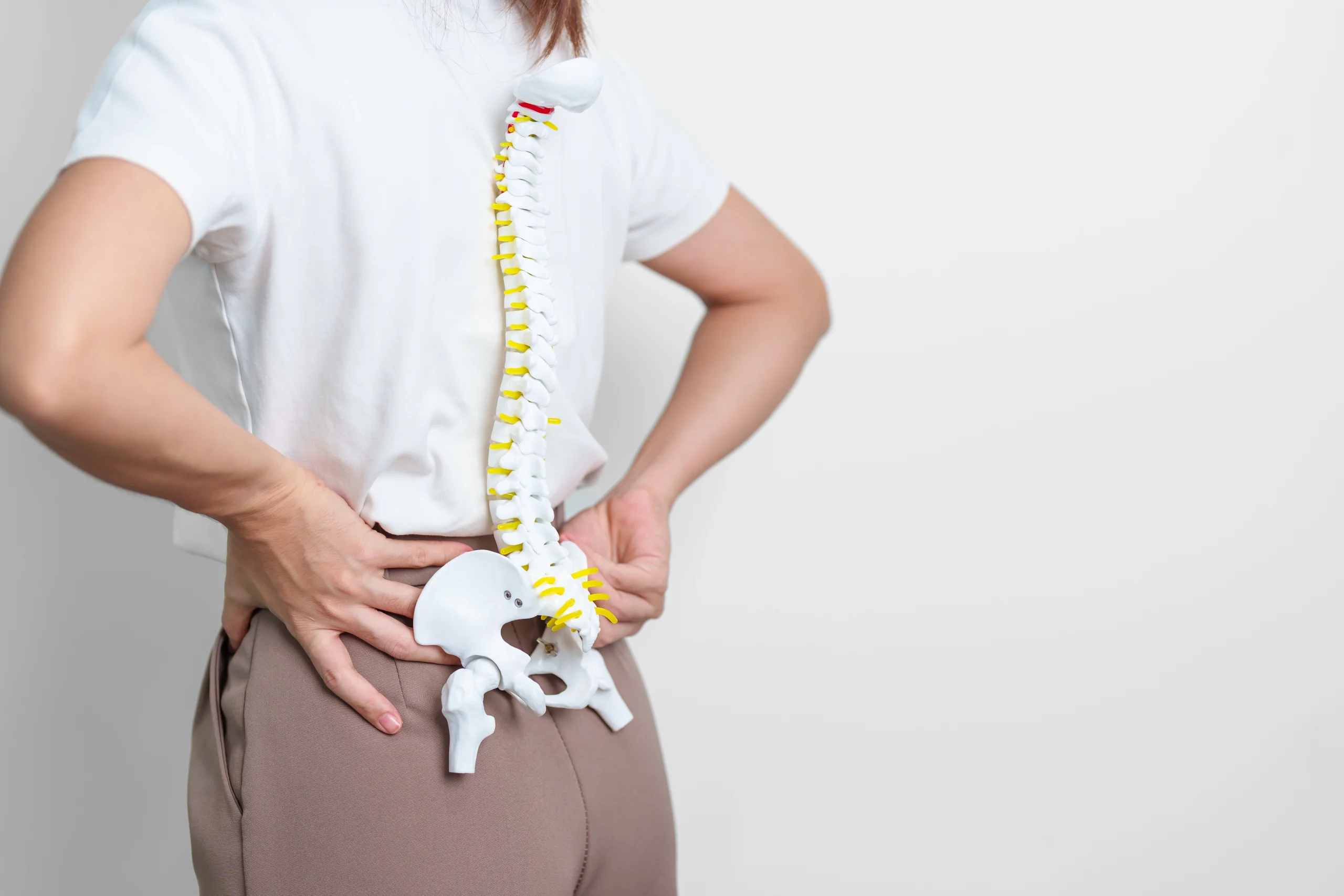
What Happens to Your Spine During Disc Degeneration
Your spine consists of 33 vertebrae stacked on top of one another, with spongy discs sitting between most of them. These intervertebral discs serve as cushions, absorbing shock and allowing your spine to bend and twist. Each disc has a tough outer layer called the annulus fibrosus and a gel-like center called the nucleus pulposus.
As you age, these discs naturally lose water content, becoming less flexible and more prone to damage. The outer layer can develop small tears, and the inner gel may start to bulge or herniate through these weak spots. When discs lose height, the space between vertebrae narrows, which can lead to bone-on-bone contact, nerve compression, and the formation of bone spurs.
Common Causes of Disc Degeneration
While aging is the primary driver of disc degeneration, several factors can accelerate or worsen the process.
1. Genetics
Genetics play a significant role – if your parents experienced spinal problems, you’re more likely to develop them as well. Your genes can influence how quickly your discs lose hydration and structural integrity.
2. Lifestyle Factors
Lifestyle factors also contribute substantially. Smoking reduces blood flow to the discs, depriving them of essential nutrients and speeding up degeneration. Obesity places extra stress on your spine, particularly the lower back, causing discs to wear out faster. Occupations or activities that involve repetitive lifting, bending, or twisting can cause cumulative damage over time.
3. Acute Injuries
Acute injuries from car accidents, falls, or sports can also trigger or accelerate disc problems. Even a single traumatic event can create tears in the disc’s outer layer, starting a cascade of degeneration that worsens over months or years.
Recognizing the Symptoms: Back and Neck Pain
The most common symptom of degenerative disc disease is pain in the affected area of the spine. When degeneration occurs in the lower back, you’ll typically experience pain in the lumbar region, sometimes radiating into the buttocks and thighs. The discomfort often worsens with sitting, bending, or lifting and may improve when walking or changing positions.
How Neck Pain Develops from Disc Problems
When degenerative disc disease affects the cervical spine, neck pain becomes the primary complaint. This discomfort may be accompanied by stiffness that limits your ability to turn your head. The pain can radiate into your shoulders, arms, and even hands, sometimes causing numbness or tingling in your fingers. You might notice that your symptoms intensify when holding your head in one position for extended periods, such as when working at a computer or reading.
Many people with cervical disc degeneration also experience headaches, particularly at the base of the skull. The pain may fluctuate throughout the day, often feeling worse in the morning after sleeping in one position or in the evening after a full day of activity.
Can This Condition Lead to a Herniated Disc
A herniated disc can occur when a weakened or damaged disc bulges or ruptures, pressing on nearby nerves. In the lower back, this often causes sharp or burning pain that may travel down one leg (commonly known as sciatica), along with numbness, tingling, or muscle weakness. When a herniated disc affects the neck, symptoms can include persistent neck pain that radiates into the shoulder, arm, or hand, sometimes accompanied by tingling or weakness in the arm or fingers. These symptoms may worsen with specific movements, prolonged sitting, or poor posture, and they often signal nerve involvement rather than simple muscle strain.
The Reality of Chronic Pain
One of the most challenging aspects of degenerative disc disease is dealing with chronic pain that persists for months or even years. Unlike acute pain from an injury that gradually heals, degenerative changes in your spine continue over time, and the pain can become a constant companion.
This ongoing discomfort can significantly impact your quality of life. Simple tasks like grocery shopping, playing with your children, or maintaining your home become difficult. Sleep often suffers, as finding a comfortable position becomes challenging. The psychological toll can be just as significant as the physical symptoms, with many people experiencing frustration, anxiety, or depression related to their limitations.
Understanding that flare-ups are common can help you manage expectations. You might have periods of relatively mild symptoms interrupted by episodes of intense pain, often triggered by specific activities or movements.
How Is Degenerative Disc Disease Diagnosed?
Getting an accurate diagnosis is the first step toward effective management. Your journey typically begins with a comprehensive medical history and physical examination. Your doctor will ask about your symptoms, when they started, what makes them better or worse, and whether you have numbness, tingling, or weakness.
During the physical exam, your doctor will assess your range of motion, posture, and any areas of tenderness. They’ll also test your reflexes, muscle strength, and sensation to check for nerve involvement.
Imaging studies provide crucial information about the condition of your discs. X-rays can show disc space narrowing and bone spurs. MRI scans offer detailed images of soft tissues, revealing disc dehydration, tears, or herniations. CT scans may be used to get better views of bone structures. In some cases, your doctor might order a discogram, where dye is injected into the disc to identify which specific disc is causing pain.
How Is Degenerative Disc Disease Treated?
Treatment approaches vary depending on the severity of your symptoms and how much they interfere with daily life. Most people start with conservative treatments that don’t involve surgery.
Physical Therapy
Physical therapy forms the cornerstone of non-surgical treatment. A skilled therapist can teach you exercises to strengthen the muscles supporting your spine, improve flexibility, and enhance your posture. Core strengthening is particularly important, as strong abdominal and back muscles help stabilize your spine and reduce disc stress.
Medications
Medications play a supporting role. Over-the-counter pain relievers like ibuprofen or naproxen can reduce inflammation and discomfort. For more severe pain, your doctor might prescribe muscle relaxants or stronger pain medications for short-term use. Steroid injections directly into the affected area can provide temporary relief by reducing inflammation around compressed nerves.
Lifestyle Modifications
Lifestyle modifications are equally important. Maintaining a healthy weight reduces spinal stress. Quitting smoking improves blood flow to your discs. Modifying how you perform daily activities – using proper lifting techniques, taking frequent breaks from sitting, and avoiding positions that trigger pain – can prevent symptom flare-ups.
Alternative therapies such as chiropractic care, acupuncture, and massage may provide relief for some people, though results vary.
When Degenerative Disk Disease Surgery Becomes Necessary
Surgery is typically reserved for cases where conservative treatments have failed after several months and symptoms significantly impair quality of life. Several surgical options exist, each with specific indications.
Spinal fusion involves removing the damaged disc and fusing the adjacent vertebrae together. While this eliminates motion at that segment and can relieve pain, it also places additional stress on neighboring discs.
The Role of Disc Replacement
Disc replacement surgery offers an alternative to fusion for appropriate candidates. During this procedure, the surgeon removes the damaged disc and replaces it with an artificial one designed to maintain motion in your spine. This approach preserves more natural spinal mechanics and may reduce stress on adjacent discs compared to fusion.
The artificial disc typically consists of metal endplates with a plastic or metal core that allows movement. While disc replacement has shown promising results, not everyone is a candidate. Your surgeon will consider factors like your age, the extent of degeneration, bone quality, and whether arthritis is present in the spinal joints.
Conclusion
Understanding that degenerative disc disease refers to a condition where spinal discs begin to break down naturally over time helps demystify the back or neck pain you may be experiencing. Whether you’re dealing with cervical degenerative disc disease affecting your neck, lumbar degenerative disc disease in your lower back, or even thoracic spine involvement in the mid-back region, recognizing degenerative disc disease symptoms early is crucial for effective pain management. When spinal disks break down, these vital shock absorbers lose their ability to cushion your vertebrae, potentially leading to complications like a herniated disk, spinal stenosis, where the spinal canal narrows around the spinal cord, or a pinched nerve that sends pain signals throughout your body. As discs begin to deteriorate and disk degeneration progresses, you may develop symptoms ranging from mild discomfort to disabling pain, along with muscle weakness in your leg muscles or other areas, and in severe cases, nerve damage that requires immediate attention.
The good news is that numerous treatment options exist to help manage lumbar degenerative disk disease, cervical degenerative disc disease, and other forms of spinal degeneration. Most people find significant pain relief through nonsurgical treatments, including physical therapy to strengthen supporting muscles and relieve pressure on the affected disc, medications for pain management, hot and cold therapy to reduce inflammation, and lifestyle modifications that address risk factors like obesity and smoking. These conservative approaches can effectively manage pain signals and help you maintain function without invasive procedures. However, when conservative care fails to provide adequate relief after several months of consistent effort, spine surgery becomes a viable option, with procedures ranging from traditional spinal fusion to advanced artificial disc replacement that preserves motion in your lumbar spine or cervical region, all designed to address the specific location and severity of your spinal degeneration.
Remember that everyone’s journey with this condition is unique, and what works for one person may not work for another. By staying informed about how your spinal discs function as shock absorbers, understanding the progression as spinal disks begin to deteriorate, and working collaboratively with healthcare providers to explore both nonsurgical treatments and surgical options when necessary, you can develop an effective strategy for managing your condition. Whether you’re addressing a single affected disc or multiple areas of concern, the combination of proper diagnosis, appropriate treatment, and lifestyle adjustments can help you maintain quality of life and continue doing the activities you enjoy despite the challenges that spinal degeneration may present.

About the Author
Dr. Eric Blundy
PAIN-FREE ACTIVE LIFE