Spinal Decompression in Seneca, SC
Spine Care offers non-surgical spinal decompression for patients dealing with herniated discs, degenerative disc disease, sciatica, and spinal stenosis. For patients who have been told surgery may be their only option, this is where that conversation changes.
Spinal Decompression Treatment in Seneca
Spinal decompression works by creating a controlled traction force that reduces pressure inside the affected disc. As intradiscal pressure drops, bulging or herniated disc material can retract away from the nerve it is compressing, and the disc begins drawing in the oxygen and nutrients it needs to heal. The result is genuine structural change, not just temporary symptom relief. For patients dealing with chronic disc-related pain, nerve compression, or radiating symptoms into the legs or arms, decompression addresses the source rather than masking what it produces.
What Happens During Your Visit
Initial Evaluation
Your first visit is a thorough clinical evaluation. we'll review your health history, assess your symptoms, perform orthopedic and neurological testing, and determine whether spinal decompression is appropriate for your specific diagnosis. Digital X-rays are taken when needed to evaluate disc height, spinal alignment, and the structural picture driving your condition.
Review of Findings and Treatment Plan
Your second visit is dedicated to your results. We walk through everything we found, identify which disc levels are involved, explain exactly why decompression is the right approach for your case, and outline your treatment protocol including session frequency and expected milestones.
First Decompression Session
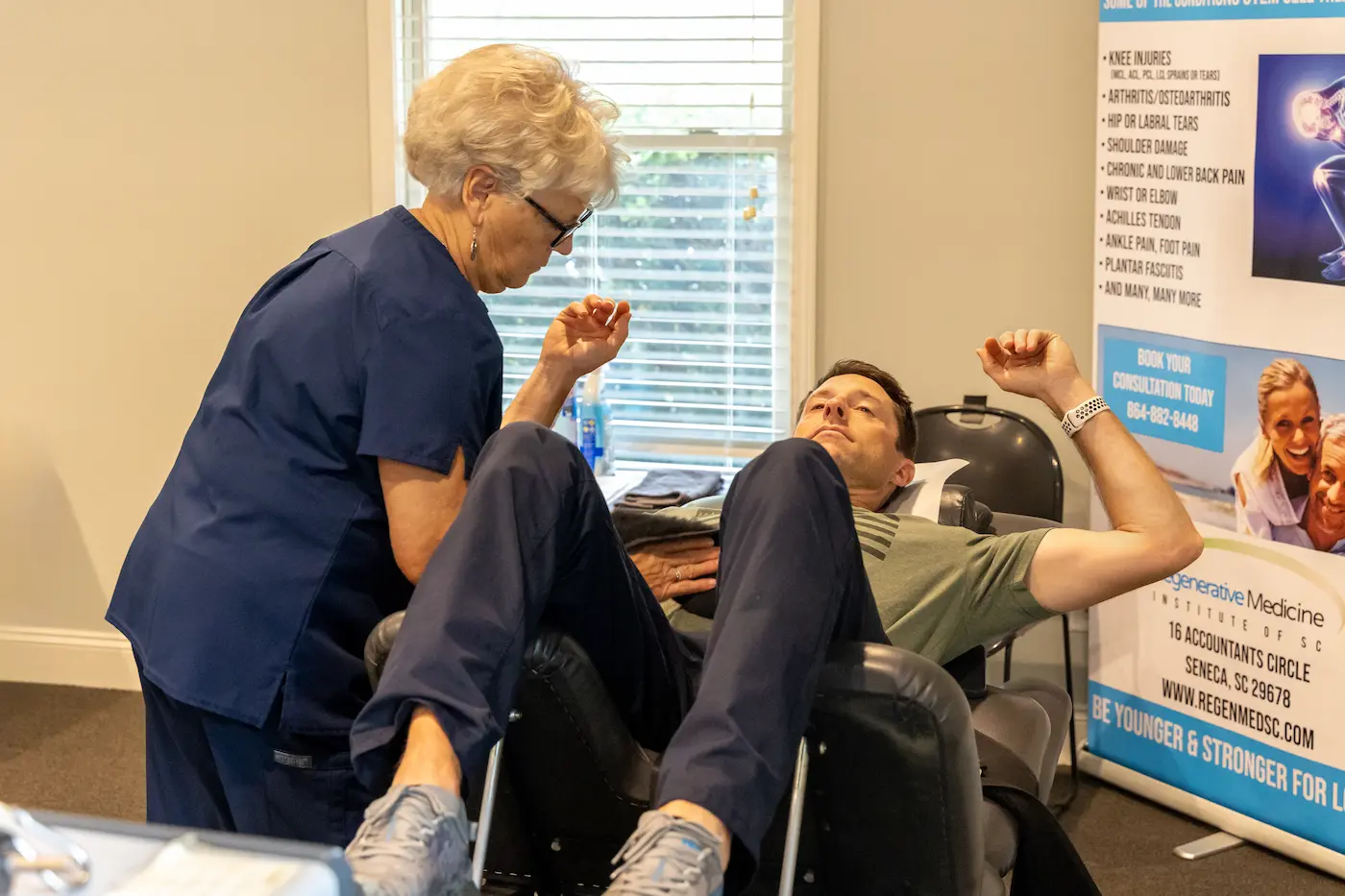
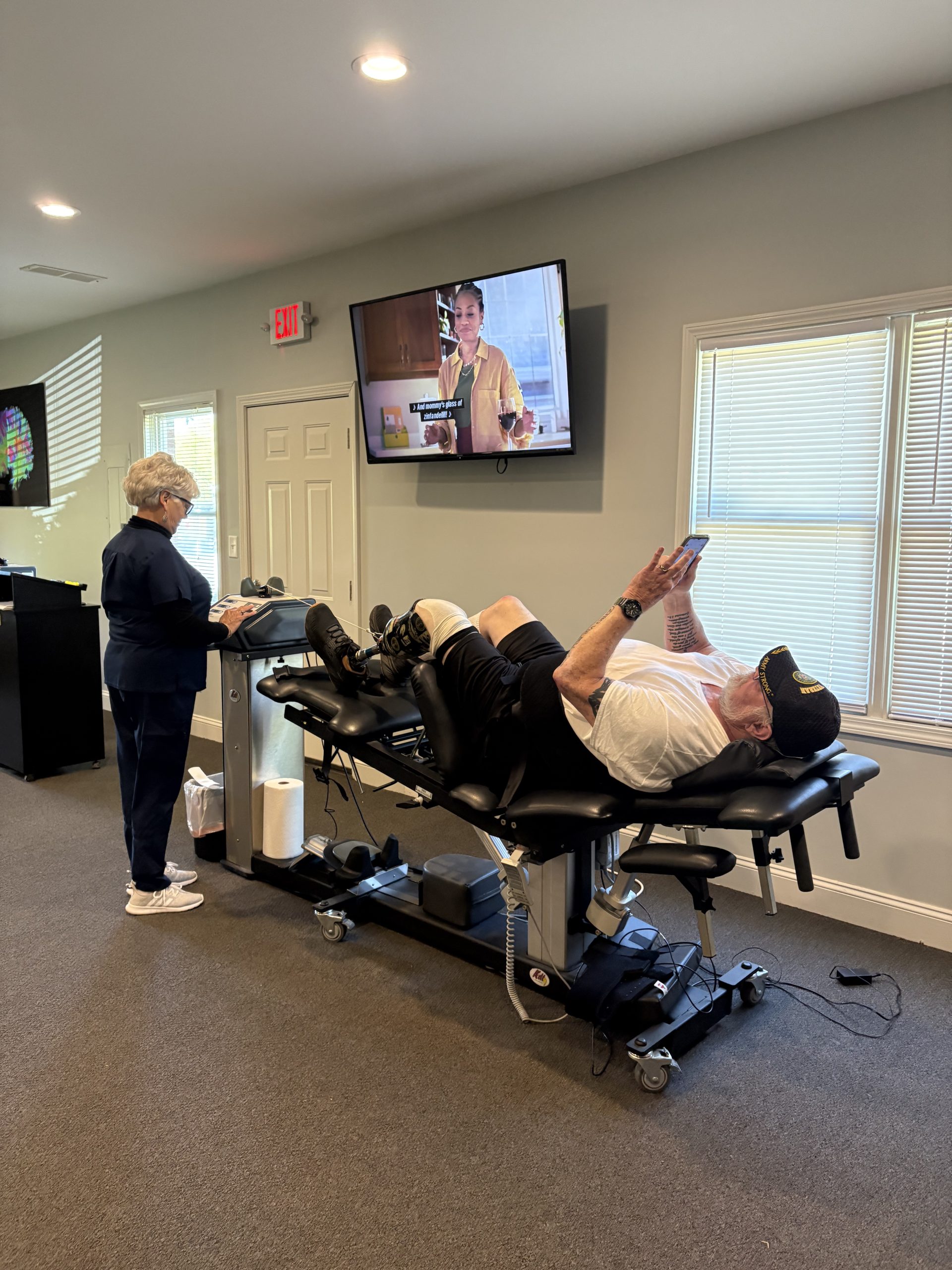
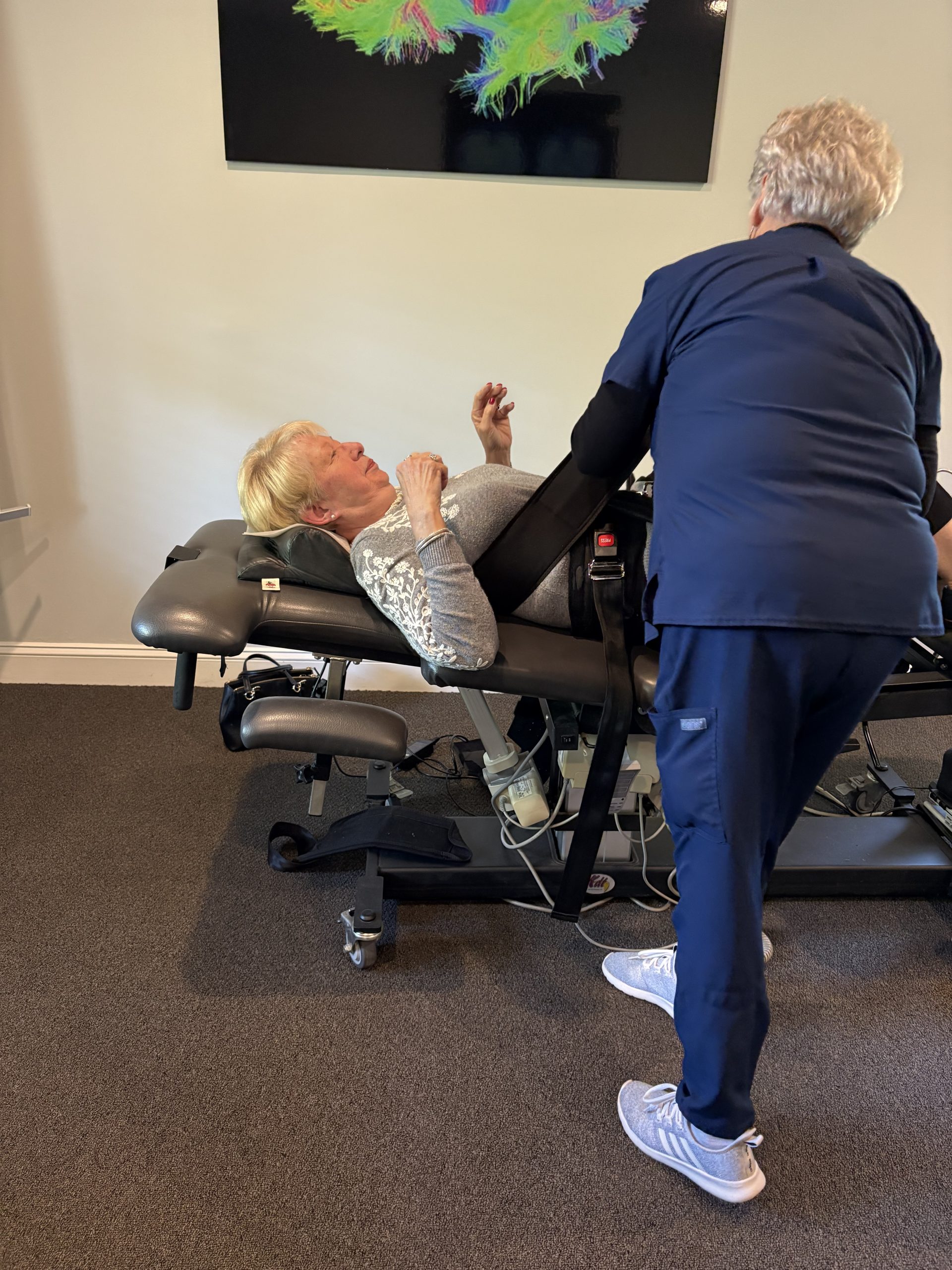
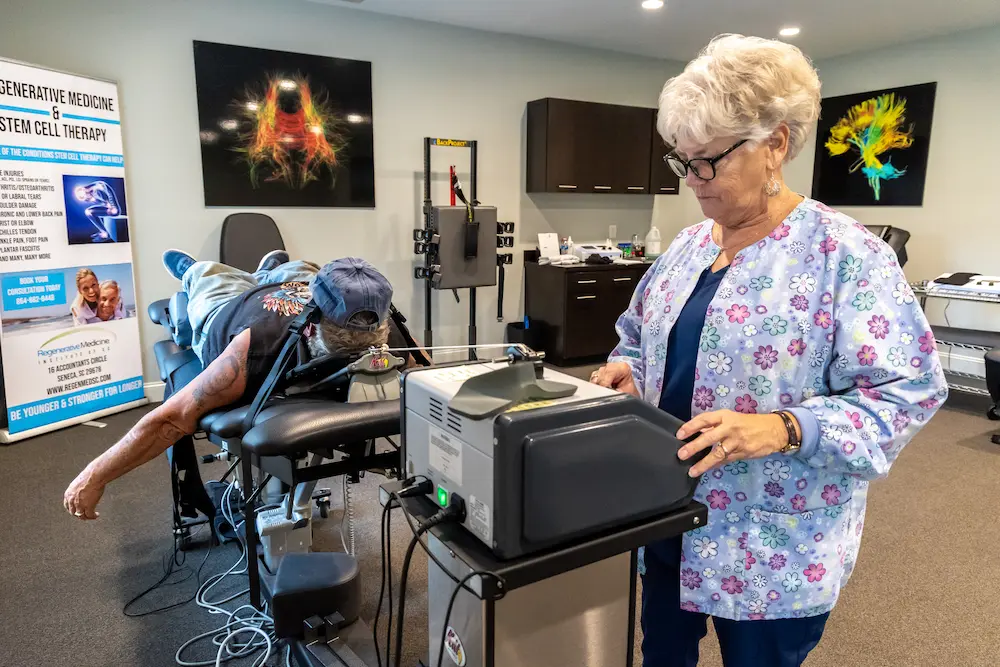
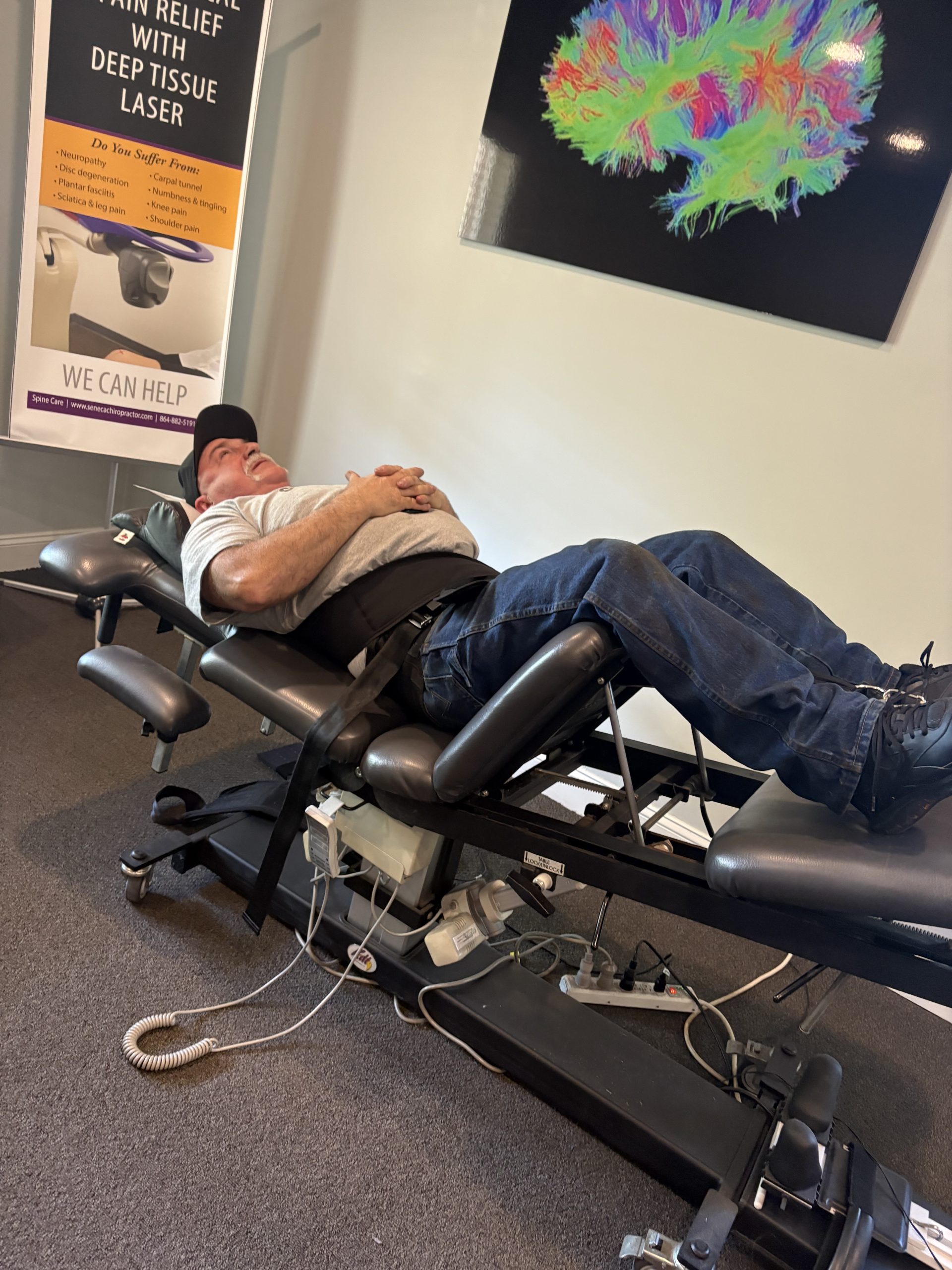
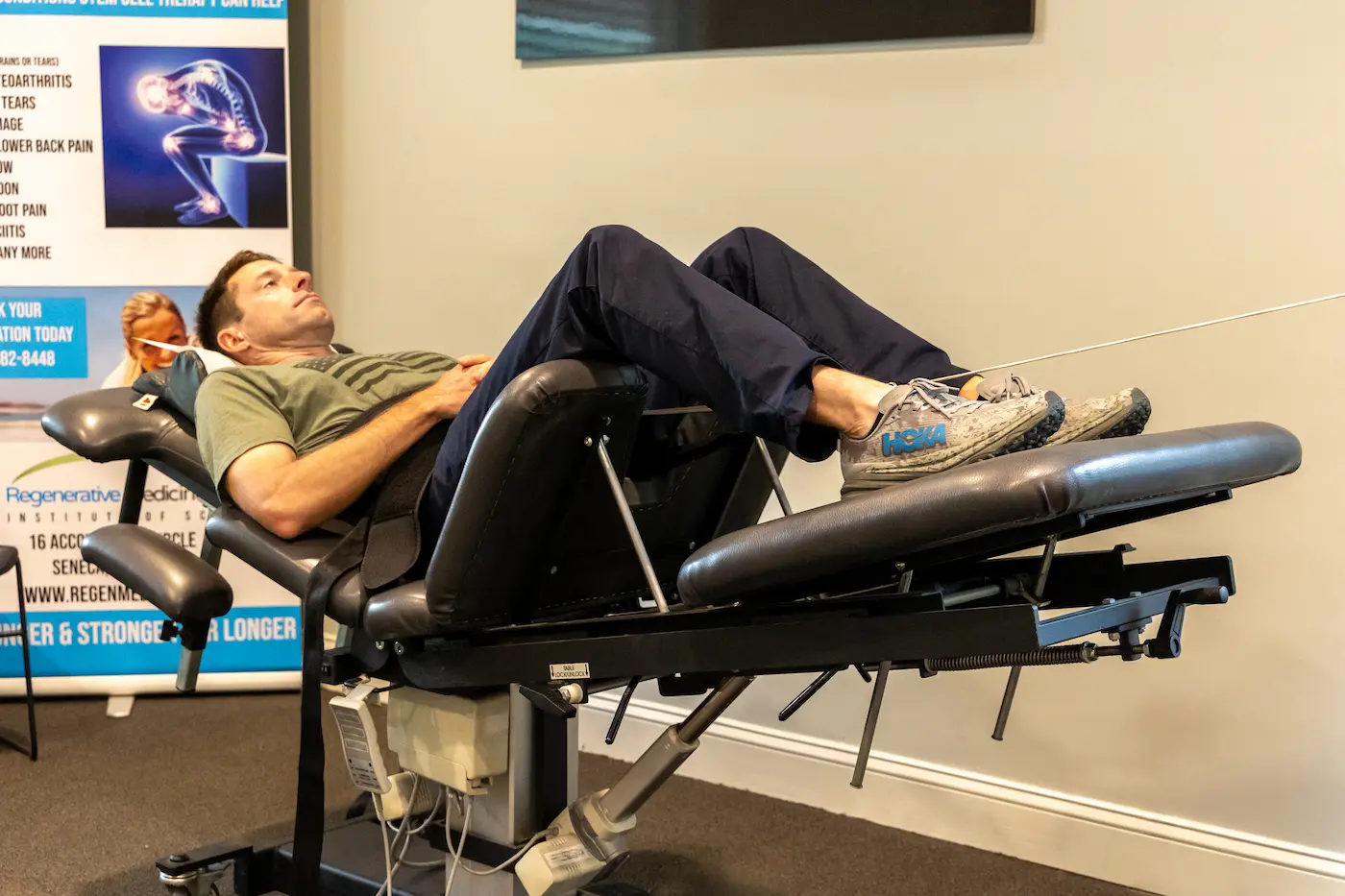
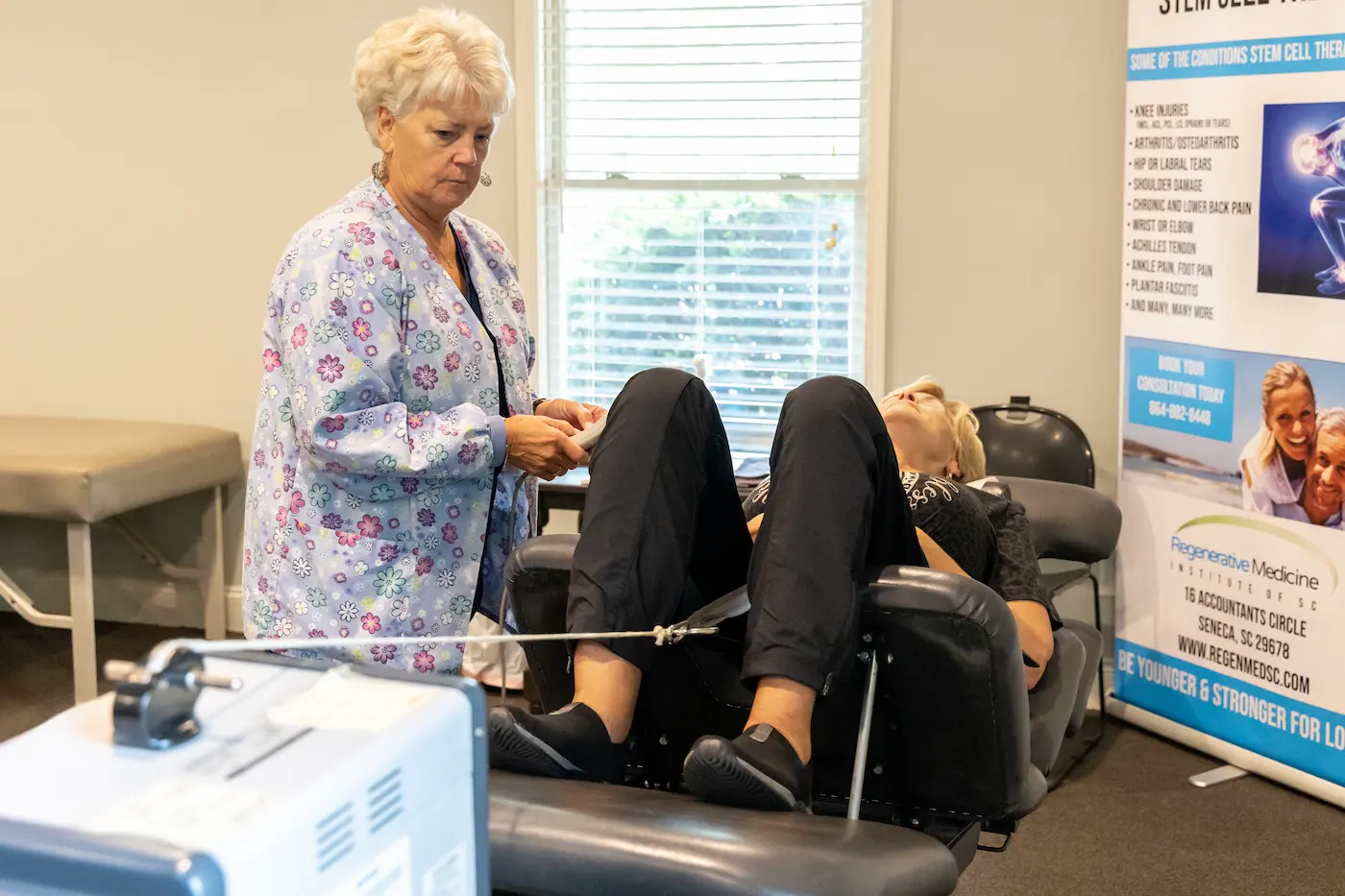
Your first session is comfortable and passive. You are positioned on the decompression table, a harness is fitted around the pelvis, and the system delivers a gentle, rhythmic traction force targeting the specific disc levels identified in your evaluation. Most patients find sessions relaxing. Some feel mild pulling in the lower back. Sessions typically run 20 to 30 minutes.
Progress Review and Plan Adjustments
Progress is assessed regularly throughout your care plan. As your symptoms change, the protocol is adjusted to match where you are in recovery. You will always know what progress is being made and what the next milestone looks like.
Who Benefits from This Therapy
- Patients with herniated or bulging discs causing back pain, sciatica, or arm and leg symptoms
- Those with degenerative disc disease who want to slow progression and reduce pain without surgery
- Patients with spinal stenosis causing nerve compression and difficulty walking
- Anyone dealing with chronic disc-related pain that has not responded to adjustments, physical therapy, or injections
- Patients who have been recommended for surgery and want to exhaust every non-surgical option first
- Post-surgical patients still experiencing pain after a spinal procedure
Why Choose Spinal Decompression?
Targets the Source of Disc Pain Directly
Most conservative treatments address the symptoms of disc problems, not the disc itself. Decompression works differently. By reducing intradiscal pressure at the specific level involved, it creates the mechanical environment the disc needs to retract, rehydrate, and heal from the inside out.
Non-Surgical with No Recovery Downtime
Spinal decompression requires no anesthesia, no hospital stay, and no recovery period. Patients come in, complete their session, and return to their day. For patients weighing surgery against conservative care, that difference in risk and disruption is significant.
Effective for the Conditions Surgery Is Often Recommended For
Herniated discs, degenerative disc disease, spinal stenosis, and sciatica caused by disc compression are exactly the conditions decompression is designed for. These are also the conditions most likely to lead to a surgical recommendation when conservative care fails. Decompression gives patients a meaningful non-surgical option before reaching that point.
Integrated into a Complete Care Plan
At Spine Care, decompression is rarely used in isolation. When your diagnosis calls for it, sessions are combined with chiropractic adjustments, shockwave therapy, or regenerative medicine to create a more complete healing environment and faster results.
Other Spine Treatment Options
- Chiropractic adjustments help realign the spine and relieve nerve pressure.
- Shockwave therapy for chronic soft tissue and joint conditions
- Regenerative medicine for patients seeking biological approaches to tissue repair
- Knee decompression for patients dealing with chronic knee pain and arthritis
Why Choose Spine Care for Spinal Decompression in Seneca
Dr. Blundy’s dual background as a Board-Certified Chiropractic Neurologist and Registered Nurse means decompression at Spine Care is not a standalone therapy applied the same way to every patient. Each protocol is built around a specific neurological and structural diagnosis, monitored throughout, and adjusted based on your response. With over 400 five-star reviews and 22 years of experience treating complex disc conditions across the Upstate, Spine Care has the track record to back it up.