
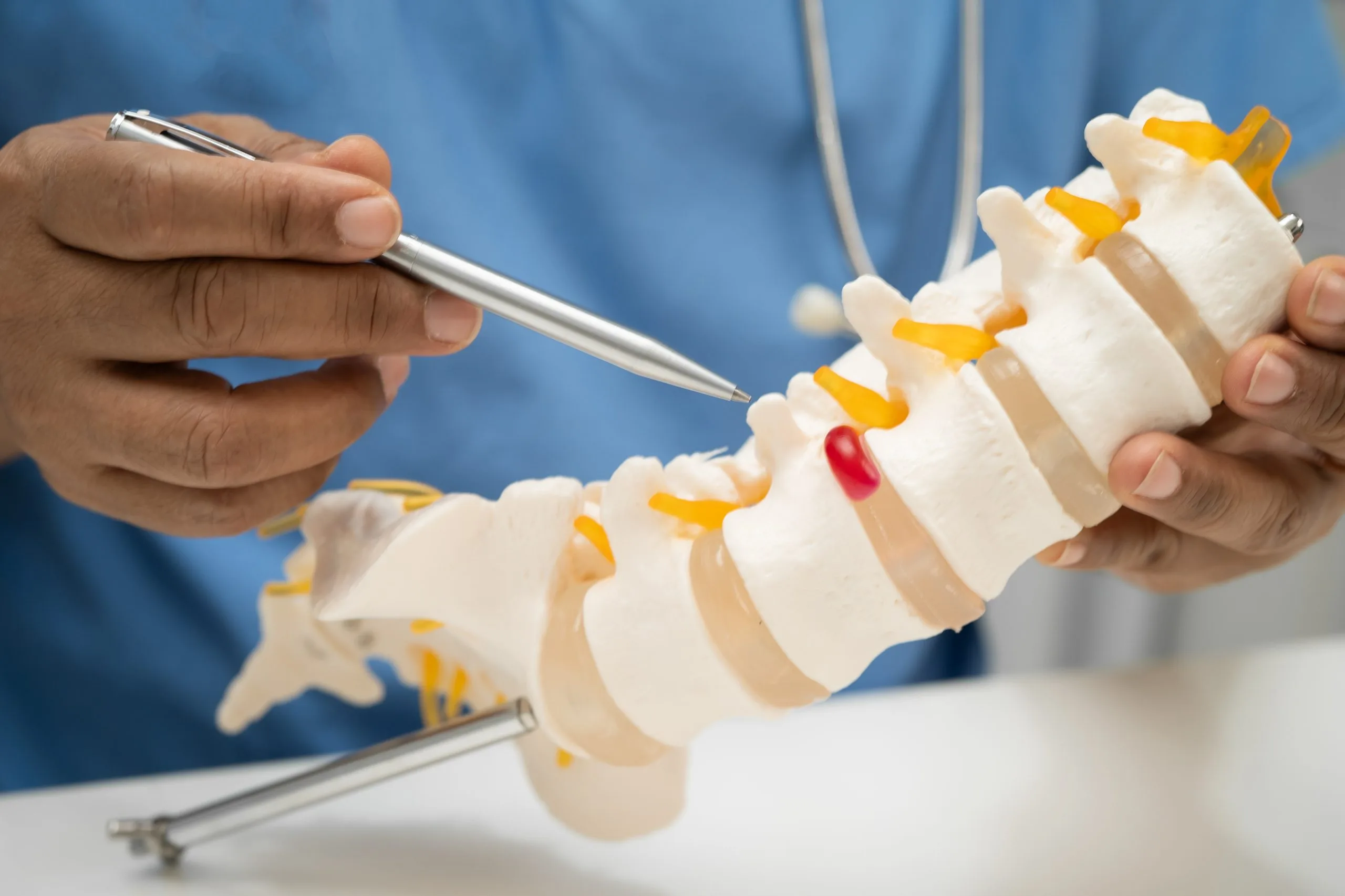
Understanding Spinal Discs
Your spine consists of 33 vertebrae stacked on top of each other, and between most of them sit spinal discs that act as shock absorbers. These discs are remarkable structures composed of two main parts: a tough outer ring (the annulus fibrosus) and a soft, gel-like center (the nucleus pulposus). Think of them as jelly donuts that cushion your spine with every movement you make.
These discs serve multiple critical functions. They absorb impact when you walk, run, or jump, distribute pressure evenly across your spine, and allow for flexibility and movement in your back. Without healthy discs, your vertebrae would grind against each other, causing severe pain and limiting mobility.
As we age, our discs naturally lose water content and become less flexible, making them more susceptible to damage. However, age isn’t the only factor that can compromise disc health.
Key Differences Between the Two Conditions
The fundamental difference between bulging and herniated discs lies in the integrity of the disc structure and the extent of damage.
A bulging disk is essentially a disc that has expanded beyond its normal space but hasn’t ruptured. Imagine pressing down on a hamburger – the patty spreads out but stays intact. This condition typically affects a larger portion of the disc’s circumference, often 25-50% or more.
In contrast, a herniated disk involves a true breach of the outer layer. The nucleus pulposus breaks through the annulus fibrosus, creating what’s often called a slipped disk (though the disc doesn’t actually slip out of place). This rupture usually affects a smaller, more localized area of the disc. The leaked material can press directly on nearby nerves, often causing more severe and specific symptoms.
Another crucial distinction is progression. Many people have bulging discs without even knowing it – they’re incredibly common and don’t always cause symptoms. A herniated disc, however, typically produces more noticeable symptoms because the leaked disc material and the breach itself can cause significant nerve irritation and inflammation.
Bulging Disc vs Herniated Disc Symptoms
Recognizing the symptoms of each condition can help you understand what’s happening in your body and when to seek medical attention.
Bulging Disc Symptoms:
- Dull, aching pain in the affected area
- Muscle weakness in nearby regions
- Numbness or tingling that’s generally mild and diffuse
- Pain that worsens with certain movements or positions
- Symptoms that may be intermittent or positional
Herniated Disc Symptoms:
- Sharp, shooting pain that radiates along the path of the affected nerve
- Intense pain in the buttocks, legs, or arms (depending on disc location)
- Significant muscle weakness in specific muscle groups
- Electric shock-like sensations
- Loss of reflexes in severe cases
- Symptoms that are typically more constant and intense
The location of your symptoms often reveals which disc is affected. A herniated disc in your lower back (lumbar spine) typically causes sciatica – pain radiating down your leg. In your neck (cervical spine), it can cause pain, numbness, or weakness in your shoulders, arms, and hands.
Risk Factors That Increase Your Chances
Understanding what puts you at risk for disc problems can help you take preventive measures. Several risk factors contribute to both bulging and herniated discs:
Age and Degeneration: As mentioned earlier, discs naturally degenerate with age. The process begins in your 30s and continues throughout life, with the most significant changes occurring between ages 40 and 60.
Occupation and Lifestyle: Jobs requiring repetitive lifting, bending, twisting, or prolonged sitting significantly increase your risk. Truck drivers, construction workers, nurses, and office workers face elevated risks due to the physical demands or sedentary nature of their work.
Weight and Physical Fitness: Excess body weight places additional stress on your lumbar discs, while weak core muscles fail to provide adequate spinal support. Conversely, poor lifting techniques during exercise can also cause disc injuries.
Genetics: Research suggests that some people inherit a predisposition to disc degeneration. If your parents had disc problems, you may be more susceptible.
Smoking: Tobacco use decreases oxygen supply to spinal discs, accelerating degeneration and reducing the body’s ability to heal damaged tissues.
How Doctors Diagnose These Conditions
If you’re experiencing persistent back pain, your doctor will start with a thorough physical examination, including testing your reflexes, muscle strength, and walking ability. They’ll ask about your pain patterns and what movements make symptoms better or worse.
Imaging tests provide a definitive diagnosis. MRI scans are the gold standard for imaging soft tissues, including discs, nerves, and muscles. They can clearly show whether a disc is bulging or herniated and reveal any nerve compression. CT scans may be used if an MRI isn’t possible, and X-rays can rule out other issues like fractures or arthritis, though they don’t show discs themselves.
In some cases, doctors may order nerve conduction studies or electromyography to assess nerve damage and determine which specific nerves are affected.
Conservative Treatments That Work
The good news is that most people with disc problems improve without surgery. Conservative treatments are typically the first line of defense, and they’re remarkably effective for both conditions.
Initial Management:
Rest (but not complete bed rest – staying moderately active is important)
Ice application for the first 48-72 hours to reduce inflammation
Heat therapy after initial inflammation subsides
Over-the-counter pain relievers and anti-inflammatory medications
Physical Therapy: A structured physical therapy program is often the cornerstone of recovery. Therapists design exercises to strengthen core muscles, improve flexibility, and teach proper body mechanics. Specific stretches can relieve nerve pressure and improve range of motion.
Alternative Therapies: Many people find relief through chiropractic care, acupuncture, or massage therapy. While the evidence for these approaches varies, they can be valuable components of a comprehensive treatment plan.
Lifestyle Modifications: Adjusting daily activities, improving posture, using proper lifting techniques, and maintaining a healthy weight all support disc healing and prevent future problems.
Most bulging discs respond well to conservative treatment within a few weeks to months. Herniated discs may take longer – typically 4-6 weeks for significant improvement, though complete healing can take several months.
When Surgery Becomes Necessary
While conservative treatments work for about 90% of disc problems, some cases require surgical intervention. Surgery becomes an option when conservative treatments fail after several months, you exp
erience progressive neurological deficits like worsening weakness or numbness, or you develop cauda equina syndrome – a rare emergency involving loss of bowel or bladder control.
Common surgical procedures include:
- Microdiscectomy (removing the herniated portion)
- Laminectomy (removing part of the vertebra to relieve pressure)
- Disc replacement in severe cases
Modern minimally invasive techniques have significantly reduced recovery times and improved outcomes.
Receive Professional Treatment for Your Slipped Disk
At SpineCare, our specialists understand that whether you’re dealing with a bulging or herniated disc, you deserve professional care tailored to your specific condition. We use advanced diagnostic imaging to determine whether your disc remains intact or has been extruded, which helps us develop the most effective treatment plan. Our comprehensive approach addresses everything from mild discomfort to sharp pain caused by significant nerve compression near the spinal cord.
Don’t let disc problems control your life – our team is ready to help you find relief and return to the activities you love.
Final Thoughts on Bulging and Herniated Discs
The discussion about herniated disk vs bulging disk ultimately comes down to whether the tough outer layer of your disc tears or simply stretches beyond its normal boundaries. A herniated disc occurs when the disc tears and material leaks into the spinal canal, potentially causing a ruptured disc that places excessive pressure on the nerve root and spinal nerves. Lumbar disc herniation is particularly common and can lead to debilitating back or neck pain that radiates throughout your body. Understanding how disc tears develop – often from poor posture, repetitive strain, or sudden injury – can help you take preventive steps before minor discomfort becomes a serious problem.
Remember that most disc issues respond well to conservative care, but severe cases involving loss of bowel control or progressive neurological symptoms require immediate medical attention. Whether you’re dealing with a minor bulge or significant nerve compression, early diagnosis and appropriate treatment give you the best chance for a full recovery. By maintaining good posture, staying active, strengthening your core, and listening to your body’s warning signs, you can protect your spinal health and reduce your risk of future disc problems.
Don’t hesitate to seek professional evaluation if you’re experiencing persistent symptoms – your spine deserves professional care.

About the Author
Dr. Eric Blundy
PAIN-FREE ACTIVE LIFE