Table of Contents
If you are struggling to sleep with a herniated disc, the solution lies in finding positions that maintain your spine’s natural alignment while reducing pressure on the affected area. For most people, sleeping on your side with a pillow between your knees or on your back with a pillow under your knees provides the best relief. Combining proper sleeping positions with supportive pillows, the right mattress, and targeted pain management strategies can transform your nights from painful and restless to comfortable and restorative.
Understanding How Herniated Discs Affect Your Sleep
Sleep disturbances are one of the most frustrating aspects of living with a herniated disc. The condition does not simply cause daytime discomfort. It can completely disrupt your ability to find a comfortable position at night. When you lie down, the pressure distribution across your spine changes dramatically compared to when you sit or stand. Without proper support, this shift can increase stress on the herniated disc and surrounding nerves.
The relationship between herniated discs and sleep creates a challenging cycle. Poor sleep increases inflammation and reduces your pain tolerance, while the pain itself prevents you from achieving restorative sleep. Many people find themselves waking multiple times throughout the night, tossing and turning in search of relief. Breaking this cycle requires a strategic approach to how you position your body during sleep.
Recognizing Herniated Disc Symptoms That Worsen at Night
Before addressing sleep positions, it is important to understand which symptoms might intensify during nighttime hours:
- Sharp, shooting pain that radiates down your arm or leg
- Tingling or numbness in your extremities
- Muscle weakness that makes changing positions difficult
- Increased discomfort when lying flat on your back
- Pain that worsens with certain movements like twisting or bending
Some people experience relief when lying down, while others find that nighttime exacerbates their symptoms. The location of your herniated disc, whether in your cervical neck, thoracic mid-back, or lumbar lower back spine, significantly influences which positions will provide the most relief.
Best Sleeping Positions for Herniated Disc Pain
Sleeping in the Fetal Position
The fetal position ranks among the most effective sleeping positions for people with herniated discs, particularly those with lumbar herniations. This position involves lying on your side with your knees drawn toward your chest, which opens up the spaces between vertebrae and reduces pressure on the disc.
To optimize the fetal position, place a pillow between your knees. This simple addition keeps your hips, pelvis, and spine aligned, preventing the top leg from pulling your spine out of alignment. Choose a pillow thick enough to keep your knees from touching, typically between four and six inches depending on your body size. Switch sides periodically throughout the night to avoid creating muscle imbalances.
Maintaining a Neutral Position on Your Back
Sleeping on your back in a neutral position offers excellent spinal support when done correctly. This position distributes your weight evenly across your body’s widest surface, reducing pressure points. The key is maintaining the natural curve of your spine.
Place a pillow under your knees to maintain the natural curve of your lower back. Some people benefit from a small rolled towel placed under the small of their back for additional support. Your head pillow should be thick enough to support your neck without pushing your head too far forward. For those with cervical herniations, a cervical roll or contoured pillow can provide targeted support.
Side Sleeping with Proper Alignment
If you prefer side sleeping but find the full fetal position uncomfortable, you can sleep on your side with your legs slightly bent or straight. The critical factor is maintaining spinal alignment from your neck through your tailbone.
Your pillow height matters enormously in this position. Your head pillow should fill the space between your shoulder and head, keeping your neck in line with your spine. Too thin and your head tilts down. Too thick and it tilts up. Either misalignment can cause pain and exacerbate symptoms.
Positions That Can Cause Pain and Should Be Avoided
Certain sleeping positions place excessive stress on herniated discs and should generally be avoided. Sleeping on your stomach ranks as the worst position for most people with disc problems. This position forces you to twist your neck to one side for extended periods, places pressure on your lower back by flattening its natural curve, and makes it difficult to maintain neutral spine alignment.
Sleeping completely flat on your back without any pillows or support can also aggravate symptoms by failing to maintain your spine’s natural curves. Similarly, sleeping with too many pillows that prop your upper body at an extreme angle can create problematic stress points.
Addressing Both Back Pain and Neck Pain
Lower back herniations and cervical herniations require slightly different approaches.
- For lumbar herniated disc pain, focus on supporting the natural curve of your lower back. The fetal position, back sleeping with knee support, and side sleeping with a pillow between your knees all work well.
- For neck pain related to cervical disc herniations, your pillow choice becomes paramount. Cervical pillows with contoured designs support the natural curve of your neck while keeping your head at the proper height. Avoid sleeping on your stomach entirely, as this position requires sustained neck rotation. When sleeping on your back, ensure your pillow is not too high or too thick, which can push your head forward and strain your neck.
Creating an Optimal Sleep Environment
Beyond positioning, several environmental factors can improve sleep with a herniated disc.
Your mattress should be medium-firm, providing support without being so hard that it creates pressure points. A mattress that is too soft allows your body to sink, pulling your spine out of alignment.
Temperature control matters more than many people realize. Keep your bedroom cool, between 60 and 67 degrees Fahrenheit, to promote better sleep quality.
Consider using a heating pad for 15 to 20 minutes before bed to relax tight muscles, but never sleep with it on.
Treatment Options for Nighttime Relief
- Pain medication timing: Take anti-inflammatory medications 30 to 60 minutes before bed as recommended by your doctor
- Gentle stretching: Perform light stretches designed for herniated discs before bed to reduce muscle tension
- Ice or heat therapy: Apply ice for acute pain or heat for chronic stiffness in the hour before sleep
- Relaxation techniques: Practice deep breathing or progressive muscle relaxation to reduce pain-related stress
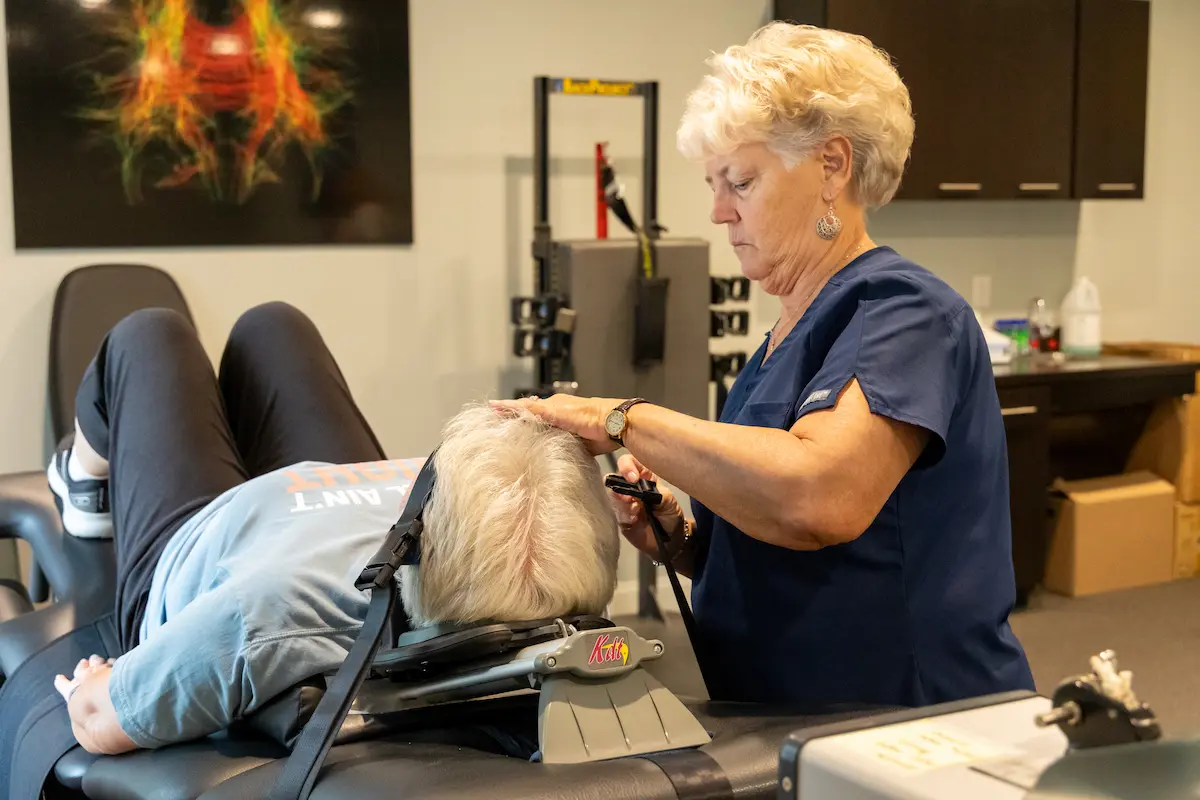
For patients dealing with persistent nighttime disc pain, spinal decompression therapy addresses the structural source of the problem directly by reducing intradiscal pressure and taking load off compressed nerve roots. Combined with chiropractic care, many patients find that daytime treatment significantly improves their ability to sleep comfortably at night.
When to Seek Medical Attention
While most herniated disc symptoms improve with conservative treatment, certain warning signs require immediate medical attention. Seek emergency care if you experience loss of bladder or bowel control, progressive leg weakness, or saddle anesthesia, which is numbness in the area that would touch a saddle. These symptoms could indicate cauda equina syndrome, a rare but serious condition requiring urgent treatment.
Consult your doctor if your pain significantly worsens despite trying different sleep positions, if you develop new neurological symptoms like numbness or weakness, or if pain management strategies that once worked no longer provide relief. The Spine Care team in Seneca specializes in exactly these kinds of complex disc presentations.
Finding Your Best Sleep Solution
Sleeping with a herniated disc requires patience and experimentation. What works perfectly for one person may not suit another, even with similar disc herniations. Start with the recommended positions, make adjustments based on your comfort, and give each position several nights to assess its effectiveness. Track your pain levels and sleep quality to identify patterns and areas for improvement.
Remember that healing takes time. Most herniated discs improve significantly within six weeks to three months with conservative treatment. Your commitment to proper sleep positioning, combined with modifications to your daytime activities and appropriate clinical care, gives your body the best opportunity to heal while ensuring you get the restorative sleep essential for recovery.
The Bottom Line
The journey to restful nights with a herniated disc begins with understanding how your sleeping patterns affect your spine and the discs that cushion your vertebrae. When a herniated disc occurs, the impact extends beyond the immediate site of injury. The spinal cord, sciatic nerve, spinal ligaments, and nervous system can all become involved, creating burning pain, radiating discomfort, and persistent symptoms that make falling asleep difficult. By avoiding stomach sleeping and choosing the optimal position for your specific condition, whether that is the fetal position with a pillow between the knees, back sleeping with support under the knees, or a reclined position during particularly difficult nights, you can significantly reduce pressure on the affected disc and protect your spine during rest.
Small adjustments like investing in a medium-firm mattress, using pillows strategically, and avoiding forward bending before bed can transform your ability to sleep comfortably. Getting quality sleep with a herniated disc is not just about comfort. It is essential for recovery. Quality sleep reduces inflammation, allows your body to repair damaged tissues, and helps break the chronic pain cycle that develops when disc problems go unaddressed. If sleep disruption from disc pain has become a persistent problem, reach out to the Spine Care team in Seneca to find out what non-surgical options are available for your specific case.