Table of Contents
For some people, yes. Regenerative therapies aim to reduce inflammation and support the body’s own repair processes inside a worn knee joint, which may ease pain and improve function enough to postpone, or in some cases avoid, knee replacement. Results vary from person to person, and these treatments are not the right fit for every knee or every stage of arthritis. For patients in Seneca and across the Upstate, they can be a worthwhile non-surgical option to explore before committing to surgery.
Why Knees Wear Down in the First Place
Most knee replacements happen because of osteoarthritis. Over years of use, the smooth cartilage that cushions the joint gradually wears thin, and the space between the bones narrows.
As that cushioning breaks down, you get the familiar signs: aching, stiffness, swelling, and pain that worsens with activity. When the wear becomes severe and daily life suffers, an orthopedic surgeon may recommend replacing the joint. But there is often a long window before that point where the knee is painful yet not truly “bone on bone,” and that window is where non-surgical care has the most to offer. You can read more about how we approach chronic knee pain and arthritis at our clinic.
What Is Regenerative Medicine?
Regenerative medicine refers to treatments that work at the cellular level to calm inflammation and support the repair of joint, disc, and soft tissue. The idea is to give the body’s own healing mechanisms a boost rather than replacing or removing the joint.
One well-known example is platelet-rich plasma, or PRP. It is made by drawing a small sample of your own blood, concentrating the platelets and growth factors it contains, and placing that concentrate where it is needed. Because it uses your own biology, it is minimally invasive and done right in the office. These therapies are designed to support the joint environment, not to promise brand-new cartilage, and a good provider will be clear about that distinction.
How Regenerative Medicine May Help You Delay Knee Replacement
The goal is straightforward. If pain and inflammation can be reduced and the joint can function better, many people are able to stay active and comfortable without moving to surgery right away.
For a knee that hurts but is not yet severely degenerated, that can mean real day-to-day relief, better movement, and more time before a replacement even enters the conversation. In some cases, people manage their symptoms well enough that surgery stays off the table for the foreseeable future. This is not about avoiding surgery at all costs. When a knee genuinely needs to be replaced, replacement is the right call. It is about making sure you have explored the less invasive options first.
Combining Regenerative Medicine With Shockwave Therapy
Regenerative care often works best as part of a coordinated plan rather than a single treatment. At Spine Care, shockwave therapy is a common companion for knee pain.
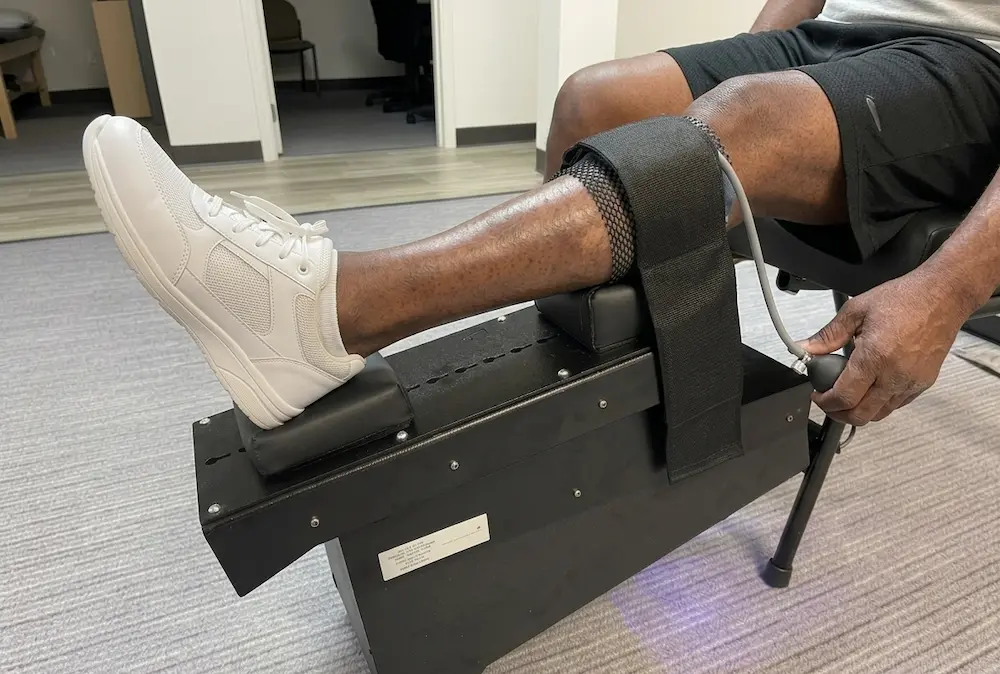
Shockwave therapy uses acoustic waves to stimulate circulation and help restart stalled healing in soft tissue around the joint. Paired with regenerative treatment, the two approaches address the knee from more than one angle. For some patients, mechanical knee decompression using the Knee on Trac system may also be added to reduce pressure within the joint, though the lead treatments for most knee cases are regenerative medicine and shockwave therapy.
Setting Realistic Expectations
Being honest about outcomes matters, especially with something as important as avoiding surgery. Regenerative medicine is not a miracle, and it does not work equally well for everyone.
How much it helps depends on the severity of your arthritis, your overall health, and how your body responds. A knee in the early or middle stages of wear tends to have more potential to improve than one that is already severely degenerated. The most useful way to think about it is as a way to buy time and comfort, not as a guaranteed alternative to a replacement you may eventually need.
Who Is a Good Candidate?
Regenerative options may be worth considering if you have knee pain from osteoarthritis or cartilage wear, want to stay active, and would rather postpone surgery if you reasonably can. People who have tried injections, bracing, or physical therapy without lasting relief are often the ones exploring this route.
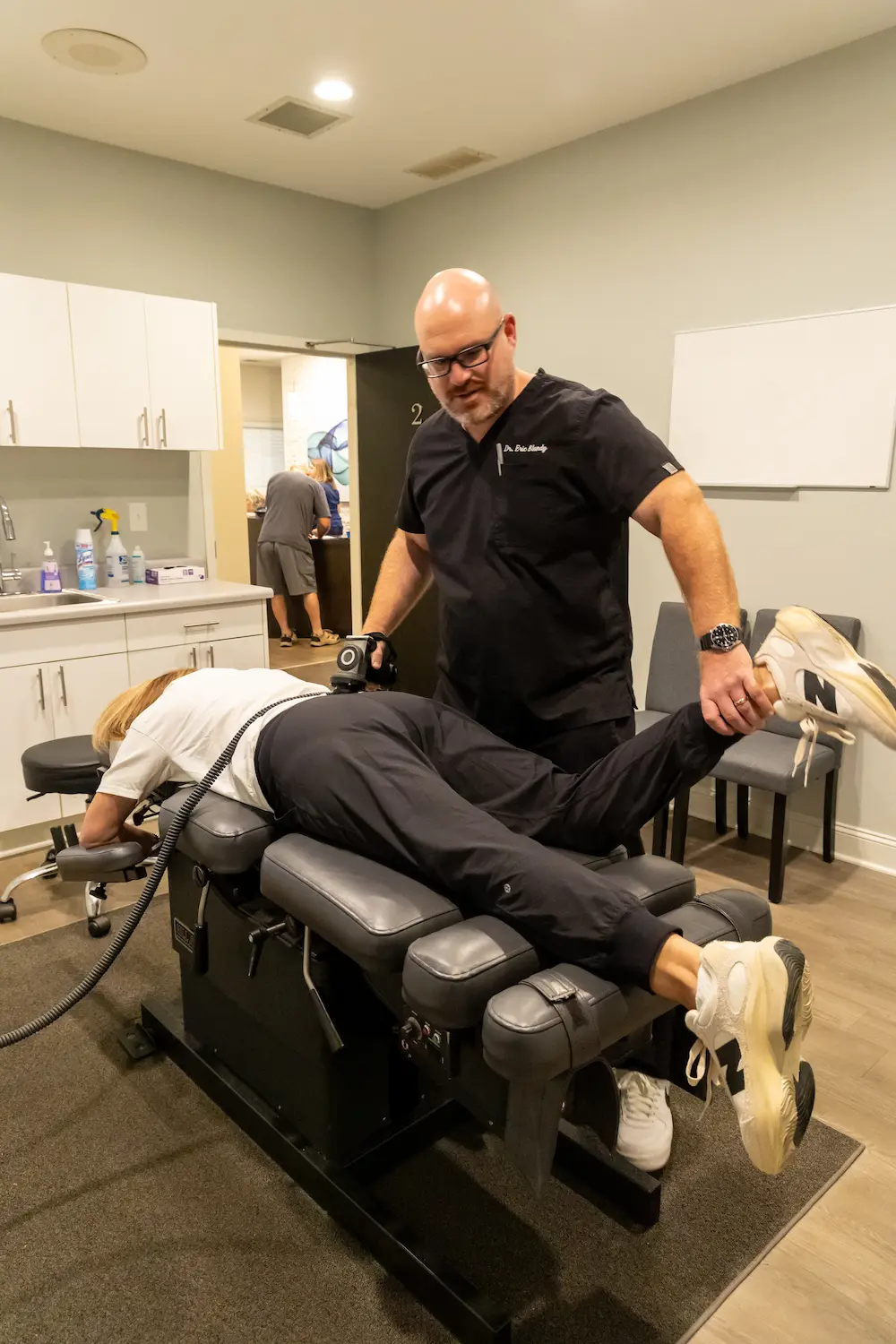
The only way to know if it fits your knee is a proper evaluation. Dr. Eric Blundy is a Board-Certified Chiropractic Neurologist and Registered Nurse, and our team assesses each knee individually before recommending anything. You can learn more about our approach on the Dr. Blundy bio page. Patients travel to Seneca from across the Upstate for non-surgical joint care like this.
Frequently Asked Questions
Is regenerative medicine for the knee painful?
Most patients tolerate it well. Because treatments like PRP use a small sample of your own blood and are done in-office, downtime is usually minimal, though some temporary soreness afterward is normal.
How soon might I notice results?
It varies. Some people feel gradual improvement over several weeks as inflammation settles and the joint responds, while others need a series of treatments. Your evaluation will give you a more realistic sense of timing for your knee.
Will regenerative medicine work if my knee is bone on bone?
Severely degenerated knees generally respond less than knees in earlier stages of wear. In advanced cases, replacement may still be the best option, and we will tell you honestly if that is what we see.
Move Freely. Live Fully.
If you are facing a knee replacement and want to know whether non-surgical options could buy you time, we would be glad to take a look. Call Spine Care at (864) 882-5191 or contact us here to schedule an evaluation, and ask about our $79 new patient special.