Table of Contents
Neither is universally “better,” because they do two different jobs. Spinal decompression uses gentle, controlled traction to reduce pressure inside a spinal disc, which makes it especially useful for disc-related problems like herniation, sciatica, and degenerative disc disease. Physical therapy focuses on building the strength, mobility, and stability that support your spine over the long haul. For many people the two work best together rather than as an either-or decision, and that is often how we combine them at Spine Care in Seneca, SC.
What Is Spinal Decompression?
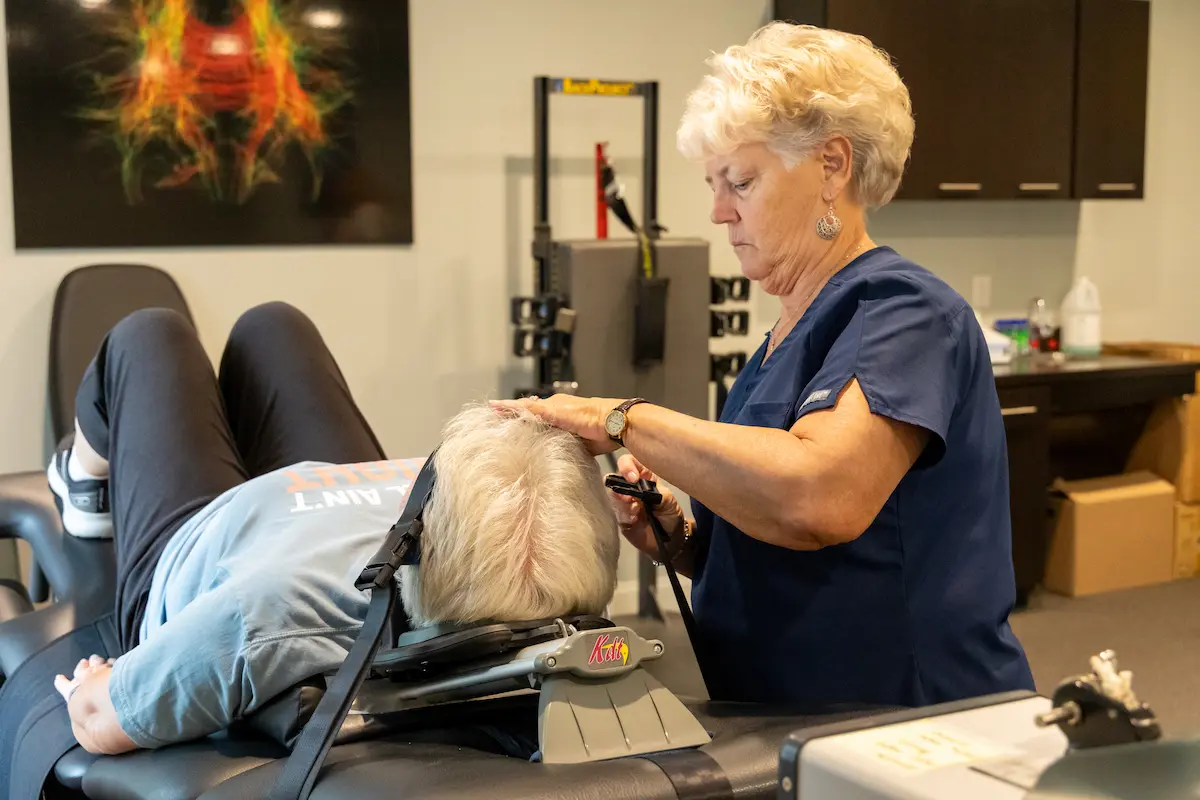
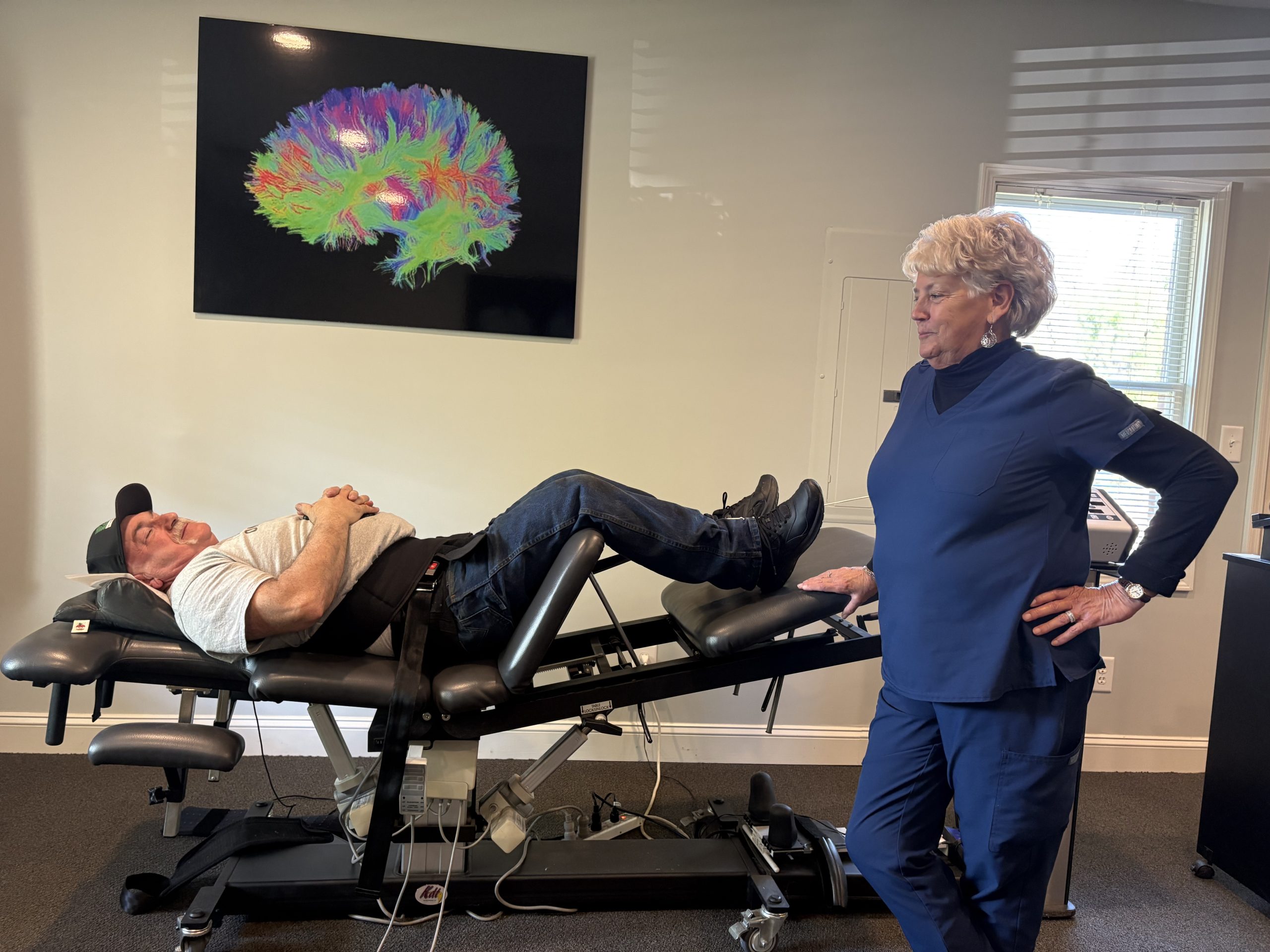
Spinal decompression is a non-surgical treatment that gently stretches the spine using a specialized table. The goal is to reduce pressure inside the discs that sit between your vertebrae.
When that pressure drops, a small vacuum-like effect can help pull bulging or herniated disc material back toward the center, away from the nerve it is pressing on. Lower pressure also improves the flow of water, oxygen, and nutrients into the disc, which supports healing in tissue that normally gets very little blood supply.
Because it targets the disc itself, spinal decompression shines for problems that start with the disc. Sessions are passive, so you simply lie on the table and relax while it does the work.
What Is Physical Therapy?
Physical therapy is an active approach centered on movement. A therapist guides you through exercises designed to strengthen the muscles that support your spine, improve flexibility, and correct movement habits that may be feeding your pain.
It is especially valuable for rebuilding after an injury, addressing weak or imbalanced muscles, and teaching your body to move in ways that protect the spine. The tradeoff is that PT asks something of you. Progress depends on doing the work consistently, both in the clinic and at home.
Where decompression calms an irritated disc, physical therapy builds the support system around it. Both matter, just at different points in recovery.
Spinal Decompression vs. Physical Therapy at a Glance
| Factor | Spinal Decompression | Physical Therapy |
|---|---|---|
| Main goal | Reduce pressure inside the disc | Build strength, mobility, and stability |
| Best suited for | Disc herniation, sciatica, degenerative disc disease, stenosis | Muscle weakness, poor mechanics, general reconditioning |
| How it feels | Gentle, passive traction while you rest | Active exercises and guided movement |
| Typical session | About 20 to 30 minutes | Around 30 to 60 minutes |
| Role in recovery | Calms the disc and nerve | Keeps the spine resilient long term |
Which One Works Better for Your Situation?
The honest answer is that it depends on what is actually driving your pain. Here is how we think about it.
When decompression tends to lead
If your pain traces back to a specific disc problem, decompression often makes sense as the anchor of care. That includes a herniated or bulging disc, sciatica from a compressed nerve, degenerative disc disease, or spinal stenosis. In these cases, strengthening exercises alone can be tough to tolerate until the pressure on the disc and nerve comes down first.
When physical therapy tends to lead
If your problem is more about weak core muscles, poor mechanics, or reconditioning after an injury, active rehab may carry more of the load. Movement-based care is also key for keeping you strong once the acute pain settles, so the same problem is less likely to return.
Can You Do Both?
Yes, and for many people that combination works better than either one alone. The logic is simple. Decompression takes pressure off the disc and calms the angry nerve, which creates a window where movement feels possible again. Rehab-style exercise then rebuilds the strength and stability that keep the disc protected going forward.
Used together, they cover both halves of recovery: settling the current flare, and reducing the odds of the next one. If you are weighing decompression against a more invasive route, our comparison of spinal decompression vs. back surgery is a useful next read.
How Spine Care Decides What You Need
We do not hand every patient the same plan. Your first visit is an evaluation, and your second is set aside to review the findings and explain what we recommend and why, before any treatment starts.
That two-visit model lets us match the treatment to the actual cause instead of guessing. Dr. Eric Blundy is a Board-Certified Chiropractic Neurologist and Registered Nurse, so nerve involvement gets a careful look when we decide how decompression, rehab, and chiropractic care should fit together. Patients come to our Seneca clinic from across the Upstate for exactly this kind of coordinated, non-surgical plan.
Move Freely. Live Fully.
Not sure whether decompression, physical therapy, or a mix is right for your back? Let’s figure it out together. Call Spine Care at (864) 882-5191 or contact us here to book an evaluation, and ask about our $79 new patient special.