Table of Contents
For many people, yes. Spinal decompression is a non-surgical treatment that relieves pressure on the discs and nerves in your spine, and for the right candidate it can ease pain enough to make surgery unnecessary. It tends to work best when the underlying problem is disc-related and addressed before it becomes severe. It is not a fit for every case, but for a lot of people in Seneca and across the Upstate, it is a reasonable step to try before considering an operation.
How Back Problems Reach the Surgery Conversation
Surgery usually is not the first option a person is offered. It tends to come up after pain has stuck around, other treatments have fallen short, or a disc is clearly pressing on a nerve and causing symptoms that will not settle.
The catch is that many people reach that point without having tried the full range of non-surgical care first. Pain lingers, frustration builds, and surgery starts to feel like the only door left. But in a lot of cases, there is still room to address the mechanical problem directly before taking that step.
That is exactly the gap spinal decompression is designed to fill.
What Spinal Decompression Actually Does
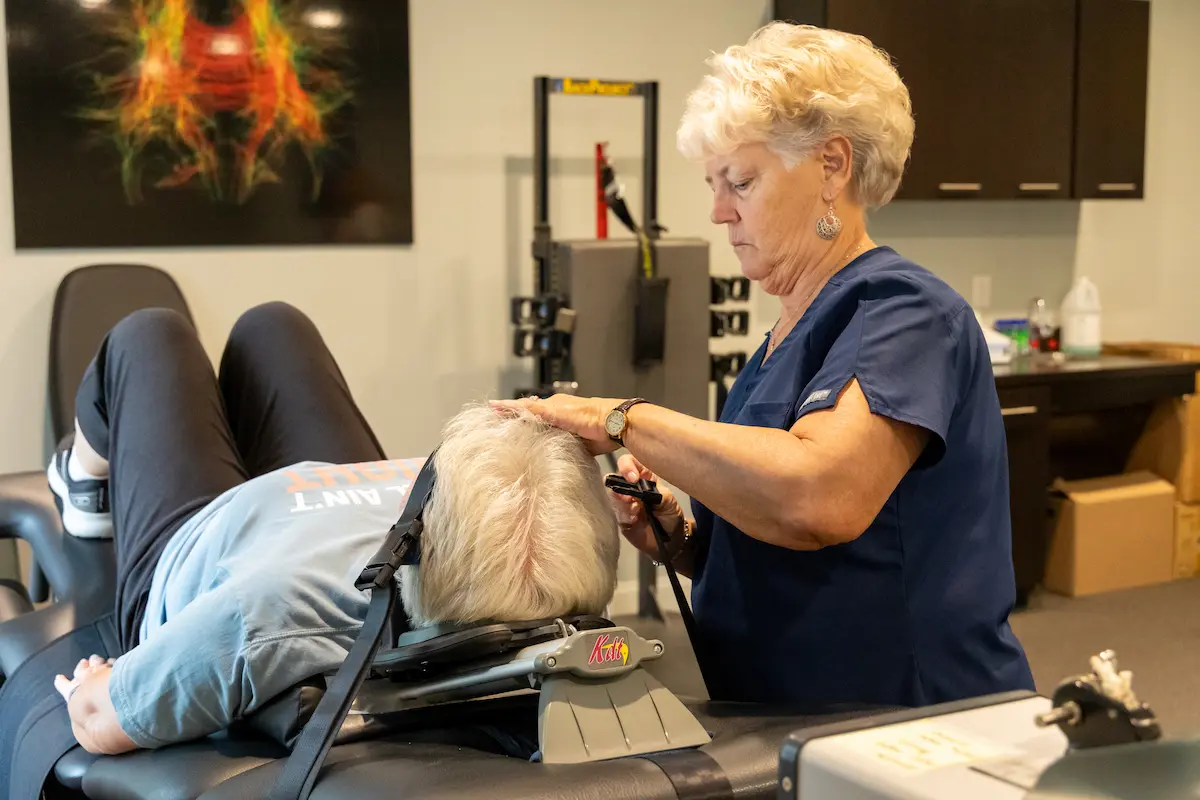
Spinal decompression uses a specialized table to gently stretch the spine in a slow, controlled way. The goal is to reduce pressure inside the discs that sit between your vertebrae.
When that pressure drops, a gentle vacuum-like effect can encourage bulging or herniated disc material to draw back toward the center, away from the nerve it is irritating. Lower pressure also pulls in water, oxygen, and nutrients, which helps nourish disc tissue that normally gets very little blood flow. In plain terms, it takes the load off the structure causing the pain and gives it a chance to recover.
How Decompression May Help You Avoid Surgery
Many back surgeries are aimed at relieving pressure on a compressed nerve or disc. Decompression targets that same underlying problem, just without an incision.
If the pressure on the nerve can be reduced and the disc can settle, the symptoms driving the surgery conversation often ease along with it. For people whose pain has not responded to rest or medication, that can be the difference between managing the problem non-surgically and heading to the operating room. If you want a fuller picture, our post on alternatives to back surgery walks through why decompression is often worth trying first, and our comparison of spinal decompression vs. back surgery lays the two side by side.
Which Conditions Respond Best
Decompression is not a cure-all, and it works better for some problems than others. It tends to help most with disc-driven conditions.
Good candidates often include people with a herniated or bulging disc, degenerative disc disease, sciatica from a compressed nerve, or certain cases of spinal stenosis. The common thread is a mechanical problem with a disc or nerve, which is what decompression is built to address.
When Surgery Is Still the Right Call
Being honest about this matters. Decompression cannot fix every spinal problem, and some situations genuinely need surgery.
Progressive nerve damage, severe or worsening weakness, and certain structural problems may call for a surgical solution, and delaying appropriate care in those cases does not help anyone. Emergencies like loss of bladder or bowel control need immediate medical attention, not decompression. The point is not to avoid surgery at all costs. It is to make sure the less invasive options have been given a fair chance first, and to recognize when they are not enough.
How Spine Care Approaches It
We do not treat every back the same way. Your first visit is a thorough evaluation, and your second is dedicated to reviewing the findings and explaining whether decompression is a realistic option for you, before any treatment starts.
Dr. Eric Blundy is a Board-Certified Chiropractic Neurologist and Registered Nurse, so nerve involvement gets a careful assessment when we decide whether decompression makes sense or whether you would be better served elsewhere. You can read more about his background on the Dr. Blundy bio page. Patients travel to our Seneca clinic from across the Upstate specifically to explore non-surgical options before committing to surgery.
Move Freely. Live Fully.
If surgery has been mentioned and you want to know whether decompression could help you avoid it, it is worth finding out. Call Spine Care at (864) 882-5191 or contact us here to schedule an evaluation, and ask about our $79 new patient special.