
Table of Contents
Running knee pain rarely means you are done running for good. For most active adults, knee pain relief in Seneca, SC starts with finding what is irritated inside the joint, then using non-surgical options like regenerative medicine and shockwave therapy to calm inflammation and support tissue repair. Rest and anti-inflammatories can quiet a flare, but they do not fix why the knee keeps hurting every time your mileage climbs.
If you have been icing after every run, swapping shoes, and hoping the ache settles on its own, you are not alone. Plenty of runners around the Upstate reach a point where the knee stops cooperating and the usual fixes stop working. The good news is that a nagging knee is often a mechanical and tissue problem you can address, not a life sentence of hanging up your shoes.
Why Running Aggravates the Knee
Every stride sends force through the knee joint, and over thousands of repetitions small problems get amplified. Tight hips, weak glutes, worn cartilage, or an old injury can shift how load moves through the joint, and the knee ends up absorbing stress it was never meant to carry.
That is why knee pain in runners often shows up gradually rather than from one dramatic moment. The tissue slowly gets overloaded, inflammation builds, and healing falls behind the damage. By the time it hurts on every run, the joint has usually been struggling for a while.
Common culprits behind persistent knee pain include cartilage wear, patellar tendon irritation, and early joint degeneration. Figuring out which one you are dealing with matters, because the right treatment depends on what is actually breaking down inside the knee.
It also is not only about the knee itself. Runners with knee pain often have an issue somewhere up or down the chain, like stiff ankles or weak hips, that quietly forces the knee to compensate. That is why a good evaluation looks at how your whole leg moves, not just the joint that hurts.
Non-Surgical Options That Target the Cause
Cortisone shots and pain medication have their place, but they mask symptoms without helping the tissue recover. For runners who want to keep training, the goal is to support real healing in the joint. At Spine Care, that usually starts with two therapies.
Regenerative Medicine
Regenerative medicine works at the cellular level to reduce inflammation and support tissue repair in the joint. For active adults with cartilage wear or chronic joint irritation, it offers a way to address the damage itself rather than just the pain signal.
These treatments are minimally invasive, done in the office, and involve little downtime, which matters when you are trying to stay active. Many patients look into this approach specifically because they want to avoid or delay surgery. We cover that in more detail in our article on whether regenerative medicine can delay knee replacement.
Shockwave and Softwave Therapy
Shockwave therapy uses focused acoustic waves to break down scar tissue and restart healing that has stalled. For runners with chronic tendon irritation around the knee, it can help the body pick up a repair process that stopped making progress on its own.
Sessions are short, usually 10 to 20 minutes, and a typical plan runs a few visits spaced about a week apart. It pairs well with regenerative care because the two approaches support tissue recovery from different angles.
Where Knee Decompression Fits
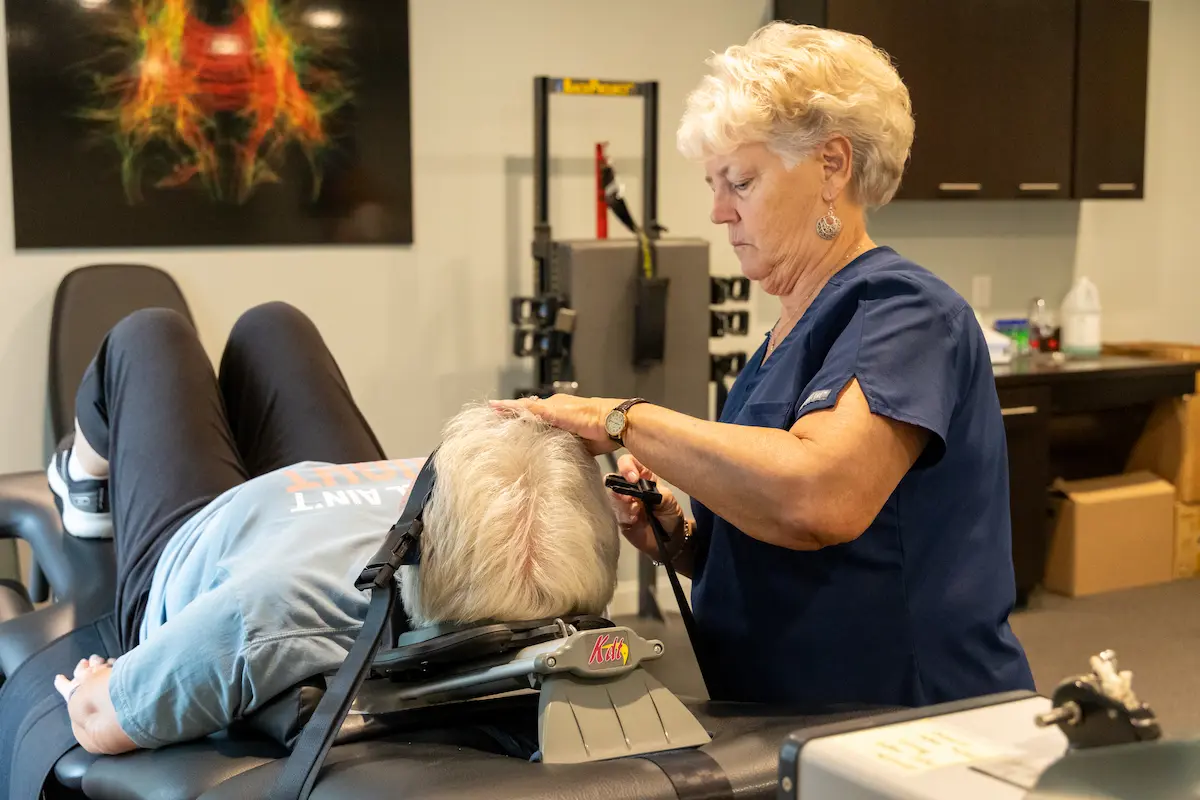
For some patients, the Knee on Trac decompression system can be a helpful addition. It applies gentle traction to the joint to reduce pressure and encourage fluid movement. We treat it as one option among several rather than the automatic answer, since the best plan depends on what your exam actually shows.
Simple Steps That Support Knee Recovery
Treatment works better when your daily habits are not fighting against it. Strengthening the hips and glutes takes pressure off the knee, since those muscles control how your leg tracks with every stride. Even short, consistent work here can change how load moves through the joint.
It also helps to build mileage gradually, warm up properly, and pay attention to worn shoes. None of this replaces treatment for a joint that is already struggling, but it gives the knee a better chance to hold onto the progress you make in the office.
What Your First Visit Looks Like
Spine Care does not do same-day “adjust and go” care. Your first visit is an evaluation, where Dr. Eric Blundy examines the knee, reviews your history, and looks at how you move. Imaging is ordered if it is needed.
Your second visit is dedicated to reviewing those findings and walking through a plan built for your specific knee, before any treatment begins. As a chiropractor practicing since 2004, Dr. Blundy has spent years working with active adults who want a clear reason for their pain, not a rushed guess.
This two-visit approach takes a little more time up front, but it means the plan actually fits the problem. That tends to matter more for runners, who need a joint that holds up under repeated load, not just a temporary fix.
When to Stop Pushing Through Knee Pain
Runners are good at ignoring discomfort, which is not always in their favor. Pain that returns every run, swelling that lingers, or a knee that feels unstable are all signs the tissue is not keeping up with the demand you are placing on it.
There is a difference between the normal soreness of training and pain that signals damage. Soreness fades within a day or two and eases as you warm up. Pain that sharpens with activity, lingers, or shows up at rest is worth taking seriously rather than running through.
Catching a knee problem earlier usually means a simpler path back to running. Waiting until the joint is badly worn narrows your options and can push you toward the surgery you were trying to avoid in the first place.
Frequently Asked Questions
Can I keep running while getting treatment?
Often yes, though it depends on what is going on in the knee. In many cases we adjust your training rather than stopping it completely, so you keep moving while the joint recovers. Your plan will spell out what is safe.
Do I need surgery for a worn knee?
Not always. Many people with cartilage wear and chronic knee pain respond well to non-surgical care, especially when they start before the joint is severely damaged. Surgery is worth exploring only after conservative options have been given a fair chance.
How soon might I feel a difference?
It varies from person to person. Some notice meaningful improvement within the first several weeks of care, while more stubborn cases take longer. We are honest about timelines rather than promising a quick cure.
Get Back to the Miles You Love
If knee pain keeps cutting your runs short, you do not have to choose between pushing through it and giving up. Call Spine Care in Seneca at (864) 882-5191 or reach out through our contact page to book your visit. New patients can start with our $79 New Patient Special, which includes a full exam and personalized plan. Move Freely. Live Fully.