Table of Contents
Shockwave therapy offers a non-invasive, drug-free solution that accelerates healing, reduces pain, and helps athletes return to peak performance faster than traditional recovery methods. The benefits of shockwave therapy for athletes include faster recovery, reduced pain, and improved function, making it an effective option for those looking to overcome persistent injuries without surgery or medication.
What Is Shockwave Therapy?
Many people hear “shockwave” and think of electricity, but the technology used for healing is completely different. Shockwave therapy, also known as Extracorporeal Shock Wave Therapy (ESWT), is a non-surgical treatment that uses high-energy acoustic sound waves to target injured tissues deep within the body.
How Shockwave Therapy Works
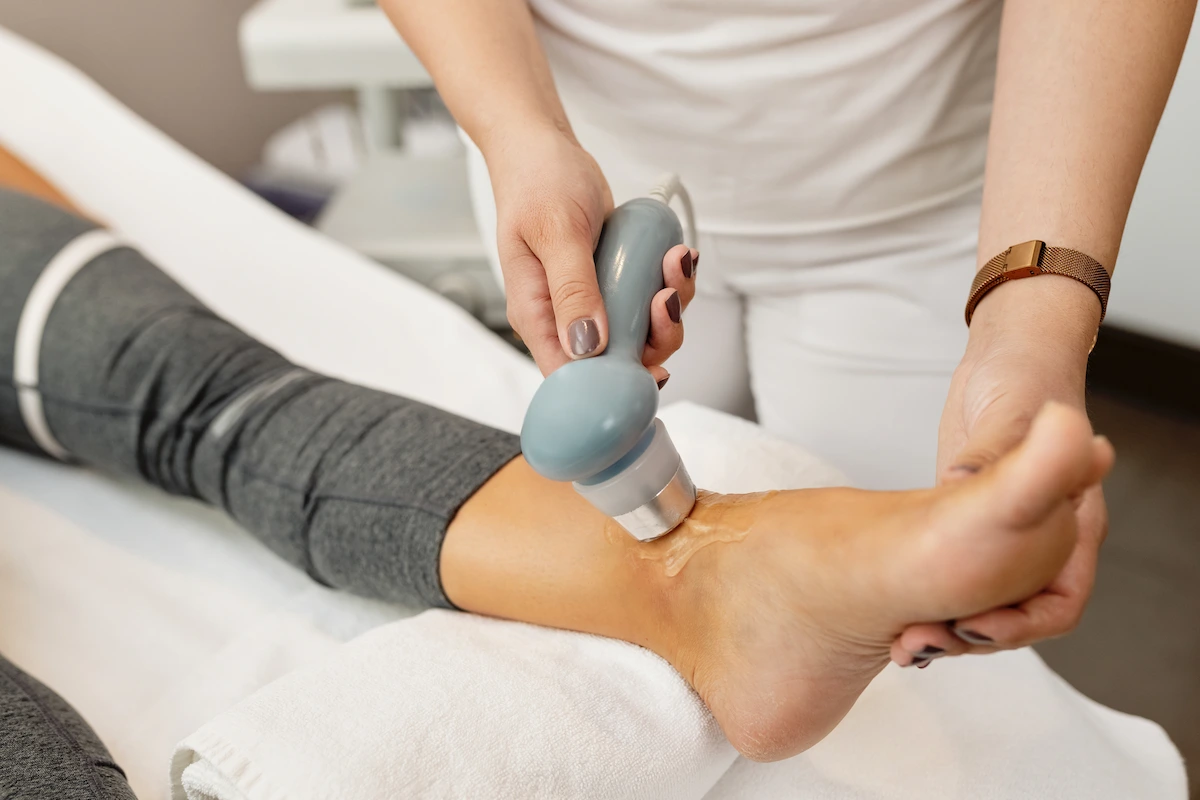
During treatment, a handheld device delivers focused acoustic waves directly to the injury site. These waves penetrate through the skin without any incisions or injections, creating controlled microtrauma that jumpstarts dormant healing processes in chronic injuries.
The acoustic waves stimulate several of the body’s natural healing processes:
- Increased Blood Flow: The sound waves encourage neovascularization, bringing more oxygen and nutrients to the injured area
- Stimulated Collagen Production: Boosts production of this critical protein for repairing damaged tendons and ligaments
- Breakdown of Scar Tissue: Helps break down fibrous scar tissue and calcifications that restrict movement
- Pain Reduction: Overstimulates pain-transmitting nerves, providing immediate and long-term pain relief
- Growth Factor Release: Triggers release of proteins that promote healing
- Stem Cell Activation: Activates resident stem cells in the treatment area
Is Shockwave Therapy Safe for Sports Injuries?
Yes, shockwave therapy is FDA-cleared and has been used safely for decades in sports medicine. This medically supervised procedure requires no anesthesia, medications, or recovery time. Because it harnesses the body’s own regenerative capabilities, it offers a powerful alternative to corticosteroid injections or surgery.
Research shows success rates between 65 and 91 percent for various sports injuries, with minimal side effects.
How Shockwave Therapy Supports Athletic Injury Recovery
The goal for any injured athlete is to heal correctly and quickly. Shockwave therapy addresses the underlying biological factors that may be slowing your recovery by re-awakening stalled healing processes.
How Shockwave Therapy Helps Heal Sports and Overuse Injuries
Many sports injuries, particularly from overuse, become chronic because the body’s healing process stalls. Tendinopathies often involve degenerated tissue with poor blood supply. Overuse injuries develop when repetitive motions cause microtears faster than the body can repair them.
Shockwave therapy disrupts this cycle by:
- Creating a new, controlled inflammatory response
- Breaking down dysfunctional scar tissue
- Improving tissue elasticity and strength
- Restoring normal movement patterns
- Forcing new blood vessel formation in tendons with limited blood supply
Evidence-Based Outcomes for Sports Injuries
Numerous studies demonstrate significant benefits for athletes. Clinical results show:
- 70 to 80 percent improvement in chronic plantar fasciitis cases
- 75 percent success rate for tennis elbow
- 85 percent of patients with patellar tendinopathy show significant improvement
- 60 to 80 percent effectiveness for rotator cuff injuries without calcification
Athletes typically experience pain reduction within 2 to 3 sessions and functional improvement by the fourth or fifth treatment.
Common Sports Injuries Treated at Spine Care in Seneca
At our Seneca clinic, we see athletes from all disciplines struggling with pain. Shockwave therapy effectively treats injuries throughout the body.
Knee Pain
Jumper’s knee and other knee pain conditions affect athletes in virtually every sport. We treat patellar tendinitis, IT band syndrome, quadriceps and hamstring strains, and knee bursitis. The treatment targets specific pain points around the knee joint, promoting healing in tissues stressed by running, jumping, and cutting movements.
Shoulder Pain
Athletes in throwing sports, swimming, and weightlifting often develop shoulder pain. Conditions we treat include rotator cuff tendinopathy, shoulder impingement syndrome, calcific tendinitis, and biceps tendinitis. Shockwave therapy is particularly effective at breaking down calcium deposits and restoring function without surgery.
Elbow Pain
Tennis elbow, golfer’s elbow, and other forms of elbow pain are classic overuse injuries. We treat lateral epicondylitis, medial epicondylitis, triceps tendinopathy, and elbow bursitis. The focused waves target precise insertion points where tendons attach to bone, addressing the root cause of pain.
Foot and Ankle Pain
Plantar fasciitis and Achilles tendinopathy are two of the most frustrating injuries for runners. We treat plantar fasciitis, Achilles tendinopathy, chronic ankle sprains, and metatarsalgia. The treatment penetrates through thick tissues to stimulate healing in these notoriously stubborn injuries.
Key Benefits of Shockwave Therapy for Athletes
The benefits of shockwave therapy align perfectly with athletic performance goals and recovery needs.
Stimulates Tissue Healing and Regeneration
Unlike passive treatments, shockwave therapy works at a cellular level to promote true healing through increased production of healing proteins, enhanced cellular metabolism, activation of growth factors, improved collagen production, and formation of new blood vessels. This regenerative effect creates lasting improvements rather than temporary relief.
Reduced Pain and Improved Function
Athletes often report rapid pain reduction and improved mobility through decreased inflammation, disruption of pain signal transmission, release of endorphins, resolution of trigger points, and reduced substance P neurotransmitters. Many experience improvements even after the first session, with continued progress over subsequent weeks.
Minimal Downtime for Athletes
In a world where every training day counts, shockwave therapy offers 15 to 20 minute treatment sessions, the ability to continue modified training during treatment, return to sport faster than with surgery, and maintenance of cardiovascular fitness. Most athletes resume full training within 4 to 6 weeks of starting treatment.
Complements Chiropractic Care
At Spine Care, shockwave therapy is integrated with chiropractic care for a more complete recovery plan. Addressing both the soft tissue damage and the structural mechanics driving overload produces better outcomes than either therapy alone.
What to Expect During Shockwave Therapy Sessions
Knowing what to expect helps athletes feel comfortable and confident in their treatment choice. The process is designed to be efficient and effective.
Treatment Protocol for Athletes
Your first visit includes a thorough evaluation to confirm you are a good candidate. During treatment:
- Evaluation: Review injury history, perform physical tests, identify trigger points
- Positioning: You will be positioned comfortably with the injured area exposed
- Gel Application: Ultrasound gel ensures efficient wave transmission
- Treatment: The device is pressed against your skin, delivering acoustic waves
- Adjustment: Intensity adjusts based on your comfort level
You will hear a clicking sound and feel a tapping sensation. Sessions typically last 15 to 20 minutes.
Recommended Number of Sessions for Sports Injuries
Most athletic injuries respond well to 3 to 6 treatment sessions scheduled one week apart. The specific protocol depends on injury severity and duration, tissue type affected, your body’s healing response, and compliance with activity modification. Every treatment plan at Spine Care is customized based on your specific injury and recovery goals.
Safety and Potential Side Effects
Shockwave therapy has an excellent safety profile. Common side effects are minor and temporary, including mild redness or bruising at the treatment site, temporary soreness for 24 to 48 hours, occasional swelling that resolves quickly, and a possible temporary increase in pain before improvement begins. These effects indicate the healing process has been activated and typically resolve within a day or two.
Conclusion
Shockwave therapy represents a significant advancement in sports medicine, offering athletes a safe, effective, and minimally invasive path to recovery. Whether you are dealing with chronic tendinopathy, stubborn plantar fasciitis, or a persistent overuse injury, this evidence-based treatment can help you break through the healing plateau and get back to doing what you love.
With high success rates, minimal downtime, and the ability to treat a wide range of conditions, shockwave therapy has become a go-to solution for athletes at every level. If you are ready to stop managing pain and start truly healing, contact the Spine Care team in Seneca today to find out if shockwave therapy is the right choice for your recovery.