
Table of Contents
After a car accident, you should see a chiropractor within 72 hours if you experience any pain, stiffness, or discomfort, even minor symptoms that seem manageable. Early evaluation is critical for identifying and treating hidden injuries. The force of even a low-speed collision can misalign your spine, strain muscles, and compress nerves in ways that are not immediately obvious.
The Spine Care team in Seneca specializes in identifying and treating these hidden injuries.
When Should You See a Chiropractor After a Car Accident?
The time to see a chiropractor is as soon as possible following your accident. Adrenaline can mask pain and stiffness initially, giving you a false sense of being uninjured. However, inflammation and muscle spasms can set in hours or days later, leading to significant discomfort. An early chiropractic evaluation can catch these issues before they worsen.
Signs You Need Chiropractic Care
Even a minor fender-bender can jolt the body and lead to injury. Watch for these symptoms that indicate you need professional evaluation:
- Neck pain or stiffness, even if mild
- Headaches, especially at the base of the skull
- Back pain in the upper, middle, or lower spine
- Numbness or tingling in your arms, hands, legs, or feet
- Reduced range of motion in the neck or back
- Shoulder or arm pain
- Pain that worsens when sitting or standing
- Muscle spasms in your neck, shoulders, or back
- Difficulty turning your head fully
Why Early Intervention Matters
Seeing a chiropractor right away does more than address immediate pain. Early intervention helps to:
- Reduce Inflammation: Chiropractic adjustments and therapies help reduce the inflammatory response in your body, which is a primary source of pain after injury.
- Restore Mobility: The impact of a crash can lock up joints in your spine and extremities. Prompt care helps restore proper movement and prevent scar tissue formation that limits flexibility.
- Prevent Chronic Conditions: Untreated whiplash or spinal misalignments can lead to chronic pain, degenerative disc disease, or arthritis down the road.
- Provide Proper Documentation: A chiropractor experienced in auto injuries will thoroughly document your condition, which is essential for insurance claims.
Common Injuries Treated by Chiropractors After Car Accidents
The sudden, forceful movements of a car crash can cause a variety of musculoskeletal injuries. The Spine Care team frequently treats patients for conditions that arise from these traumatic events.
Whiplash
Whiplash is one of the most common auto accident injuries. It occurs when your head is rapidly thrown backward and then forward, straining the muscles and ligaments in your neck. This can misalign the vertebrae in your cervical spine, leading to symptoms that often appear 24 to 48 hours after the accident:
- Neck pain and stiffness
- Headaches
- Shoulder pain
- Fatigue
- Difficulty concentrating
Neck and Back Pain
Beyond whiplash, accidents frequently cause broader neck and back pain from the sudden impact forces. The force of an impact can compress your spine, leading to herniated or bulging discs, pinched nerves, muscle strains, and ligament sprains.
Sciatica and Nerve Pain
If a collision causes a disc in your lower back to bulge or herniate, it can press on the sciatic nerve. This condition, known as sciatica, results in sharp shooting pain down one or both legs, numbness in your leg or foot, weakness when trying to move your leg, and pain that worsens when sitting.
Other Soft Tissue Injuries
Car accidents often cause injuries to muscles, tendons, and ligaments throughout your body. Common areas include the shoulders from bracing against the steering wheel, the hips from the seatbelt, and the knees from hitting the dashboard.
How Chiropractic Care Helps With Car Accident Injuries
Chiropractic care offers a non-invasive, drug-free approach to healing after a car accident. The primary goal is to correct spinal misalignments caused by the impact. By restoring proper alignment, chiropractic adjustments relieve pressure on nerves, reduce pain, and allow your body’s natural healing processes to take over.
The Spine Care approach to auto injury rehabilitation focuses on treating the root cause of your pain, not just masking symptoms. Care uses gentle adjustments tailored to your injury severity, ensuring treatment remains comfortable even when you are already in pain. Beyond adjustments, chiropractic care improves blood flow to injured areas, reduces inflammation, and breaks up scar tissue before it becomes problematic.
Preparing for Your First Chiropractic Visit
What Medical and Accident Information to Bring
Gather these items before your appointment to ensure the most effective treatment:
- Details about the accident including date, time, and location
- Police report or accident report number
- Photos of the vehicles or accident scene
- Any medical records from an emergency room or urgent care visit
- Any X-rays or imaging
- List of current medications
- Timeline of when symptoms appeared
How to Choose a Chiropractor Experienced in Auto Injury Care
Not all chiropractors have the same level of experience with auto accident injuries. Look for practices that specifically offer auto injury services and understand the documentation requirements for insurance. It is important to find a provider who understands the unique biomechanics of crash-related injuries. The Spine Care team has treated hundreds of accident victims and knows how to identify injuries that might be missed elsewhere.
What to Expect at Your First Chiropractic Appointment
Your first visit is dedicated to understanding your injuries and developing a precise roadmap for your recovery. This comprehensive evaluation typically lasts 45 to 60 minutes.
Medical History Review
The clinical team will discuss your overall health, any pre-existing conditions, past injuries, and current medications. This helps establish how the accident may have impacted your body specifically.
Questions the Chiropractor Will Ask
Be prepared to answer questions about the direction and force of impact, your position in the vehicle, whether you lost consciousness, when symptoms first appeared, what movements increase or decrease pain, and any treatments you have already tried. After the consultation, a hands-on physical exam will be performed to assess your condition thoroughly.
Range of Motion and Muscle Strength Assessment
Your provider will gently guide you through movements to assess the mobility of your neck, back, and other affected joints. Muscle strength is also tested to check for nerve-related weakness.
Imaging Tests
Depending on your injuries, X-rays may be taken in the office. Digital X-rays provide immediate results showing the alignment of your spine, identifying any fractures or dislocations, and pinpointing areas of degenerative change worsened by the accident.
Developing a Personalized Treatment Plan
Based on your history, examination, and diagnostic findings, a customized treatment plan is created addressing your specific injuries. The team will walk you through recommendations including visit frequency and expected recovery timeline.
Types of Chiropractic Treatments After a Car Accident
Your treatment plan will be unique to you and may include a combination of therapies to accelerate healing.
Common Chiropractic Techniques Used
The foundation of your care will likely be chiropractic adjustments tailored to your injury type:
- Diversified Technique: Traditional hands-on adjustments using controlled force
- Activator Method: Gentle, instrument-assisted adjustments for severe pain cases
- Flexion-Distraction: Specialized table movements for disc injuries
- Cervical Adjustments: Specific techniques for neck injuries and whiplash
Additional Therapies That May Be Recommended
To support your recovery, additional advanced therapies available at Spine Care in Seneca may be incorporated:
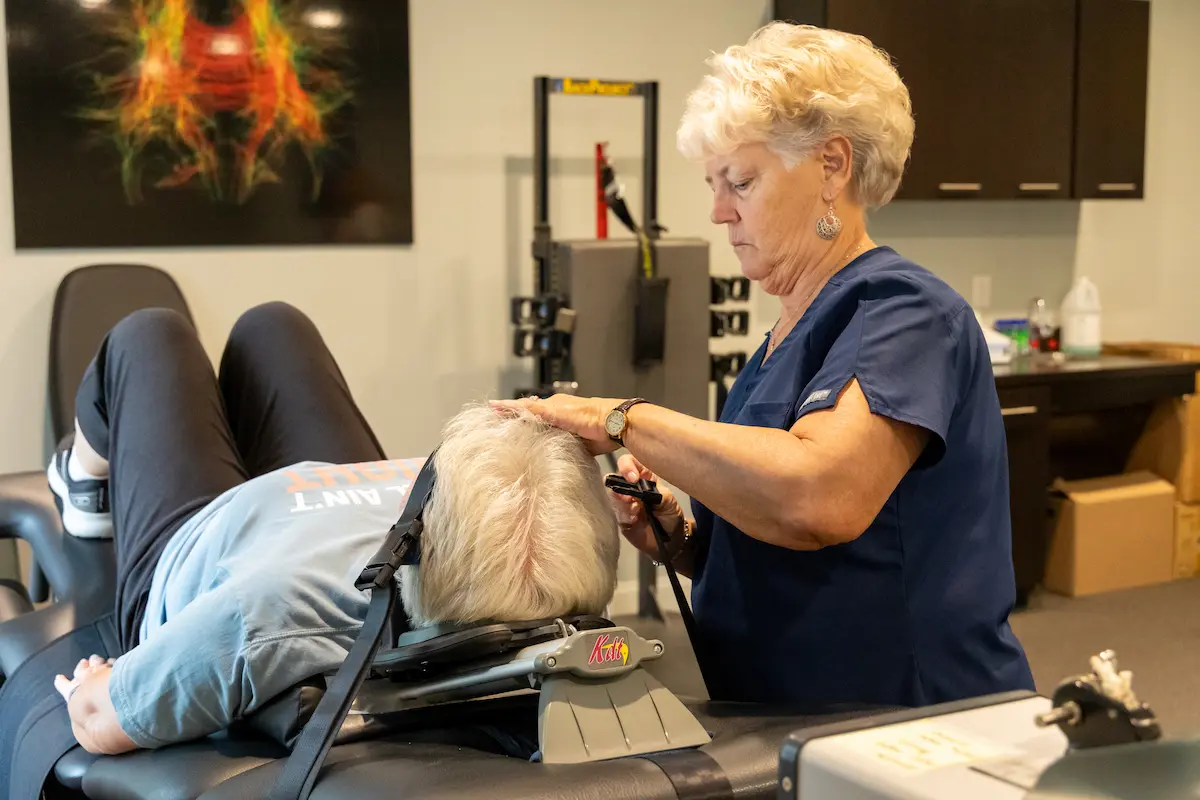
- Spinal Decompression: Non-surgical therapy that gently stretches the spine to relieve pressure on discs and nerves
- Shockwave Therapy: Uses acoustic waves to break up scar tissue and stimulate healing in chronic soft tissue injuries
- Therapeutic Exercises: Restore strength and flexibility throughout recovery
What to Expect During Recovery
Recovery is a process, not a single event. Your progress will depend on the severity of your injuries, your overall health, and your commitment to your treatment plan.
Typical Recovery Timelines
Every patient and injury is different. General timelines include:
- Minor soft tissue injuries: 4 to 6 weeks
- Moderate whiplash: 2 to 3 months
- Severe injuries with disc involvement: 3 to 6 months
Most patients experience significant pain relief within the first 2 to 3 weeks of treatment, with continued improvement throughout their care plan.
Monitoring Progress and Adjusting Treatment
The team regularly reassesses your condition at follow-up appointments to ensure you are progressing as expected. Your treatment plan is not static. It will be adjusted as you heal to ensure you are always receiving the most effective care. If improvement plateaus, the approach is modified, potentially adding new therapies or adjusting visit frequency.
Conclusion
A car accident can be a jarring, disorienting experience, and the injuries it causes are not always immediately obvious. Seeking chiropractic care within 72 hours gives you the best chance at a full recovery by catching hidden injuries early, reducing inflammation, and preventing short-term pain from becoming a long-term problem. Whether you are dealing with whiplash, back pain, nerve discomfort, or soft tissue injuries, the Spine Care team in Seneca is here to guide you through every step of the healing process with personalized, drug-free care.
Don’t wait for symptoms to worsen. Contact Spine Care in Seneca today to schedule your post-accident evaluation and start your recovery on the right track.